Our Gumotex Palava is ok in a breeze if I’m sitting in the middle of the boat; however, I’ve generally got a child in the front so I’m sitting in the back and this makes the boat very hard to handle. So I’ve fitted a skeg.
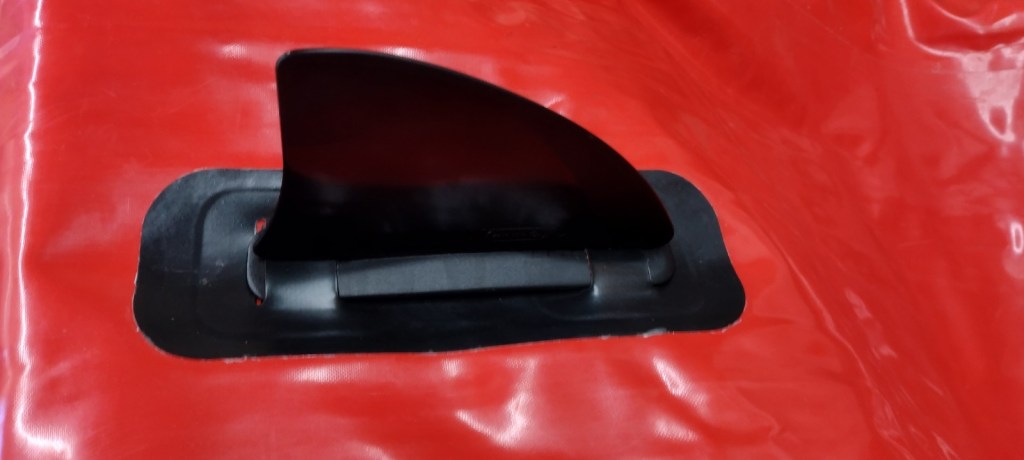

Our Gumotex Palava is ok in a breeze if I’m sitting in the middle of the boat; however, I’ve generally got a child in the front so I’m sitting in the back and this makes the boat very hard to handle. So I’ve fitted a skeg.
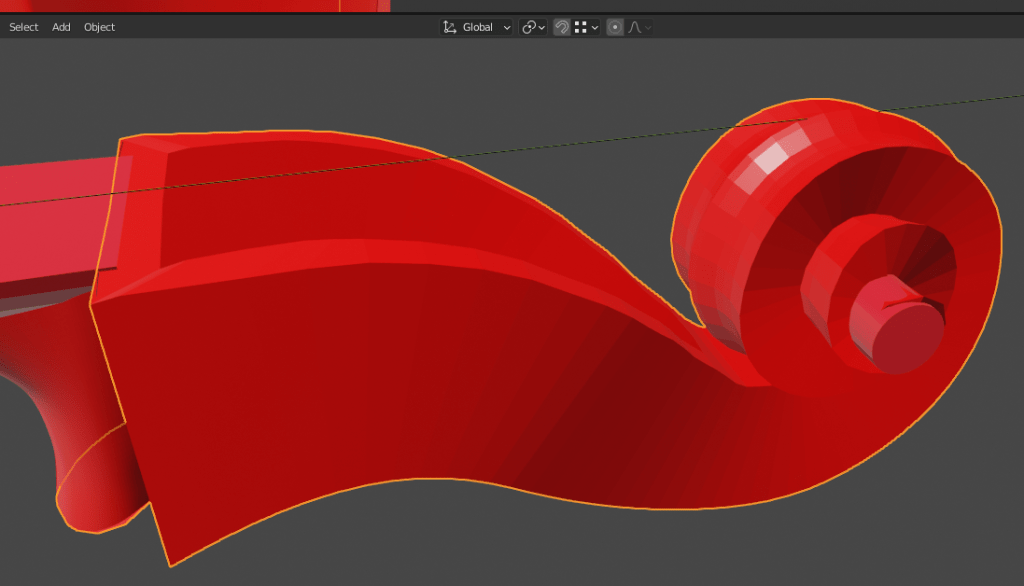
I’ve been using Blender to play with CNC. Blender isn’t normally recommended for CNC design but in the case of classical string instruments it is pretty good – the shapes are all curved surfaces.
One of the trickiest elements of a classical string instrument is the scroll. This was intended to provide a place for the instrument maker to show off their carving skills. It took me a while to figure out how to do this in Blender so I thought I’d share it here. I’m not a Blender expert so maybe there is a better way; however this works for me.
Continue readingSome of the literature on violins suggests that the shape of the cross-section of the top and back is based on cycloids. Whether this is actually true is a matter for debate. Certainly much of the shape of a violin can be generated from circles so it is certainly possible that the masters based the shape on a cycloid which is generated from circular geometry. However, some modern makers say that they shape the top until it looks right rather than until it matches a template, so requiring the shape to fit precise geometry is probably requiring too much precision from the process.
Regardless, here is a script to generate the shape of the top of an arch-top string instrument using curate cycloids. I’ve written it in Python. I’m not experienced in Python so please excuse any errors and let me know how it could be better in the comments below.
The script takes in a PNG file that holds the shape of the long-arch down the centre of the instrument, plus the shape of the edges of the curved section. Using a PNG to hold this information means you can generate these curves however you like.
Continue readingSome steps forwards and some steps back.
I destroyed the 3018 CNC router by trying to fit a more concentric collet chuck to the spindle. This moved the motor bearings. Given how problematic this thing has been I’m reluctant to spend more money on it.
So I’ve been trying to do the plates by hand. On the whole this has been more successful than using the CNC, given the CNC’s habbit of self destruction taking the wood with it. By hand is almost as fast and less liable to destroy the workpiece. I’ve been using a large gouge bought second hand on EBay plus a plane I made myself.
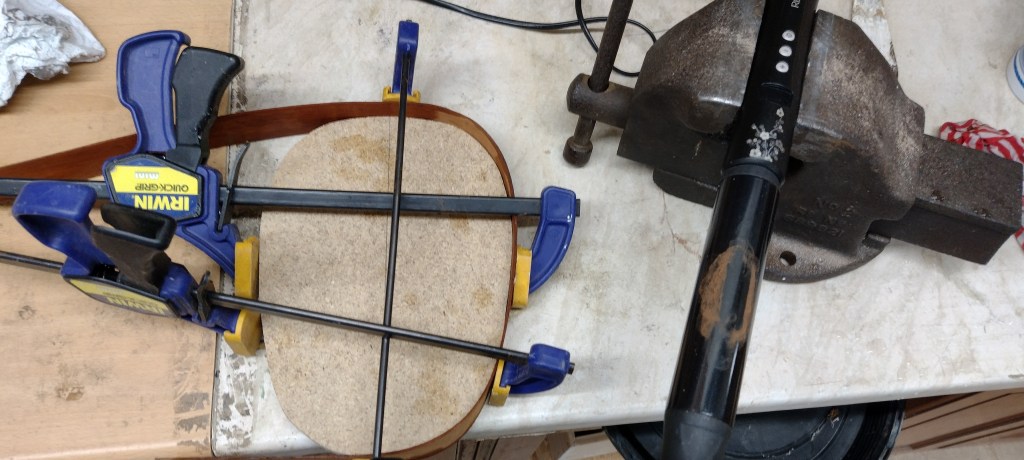
I’ve bent the sides round the mold – this was easy enough. Hair curlers work very well! I did it in two sections, leaving it overnight clamped to the mold to dry out.
Continue readingI need a couple of small planes for finishing soundboards. These are expensive so I figured that the best thing to do was make my own.
The blade is a strip of gauge plate or ground flat stock – O1 carbon steel in unhardened form, readily available from EBay. I’ve had this bit lying around for years left over from something else. Being unhardened it is easy to shape with hacksaw and file.
I didn’t measure anything on this other than the angle of the bed of the blade (45º). The pictures should show how it all goes together.
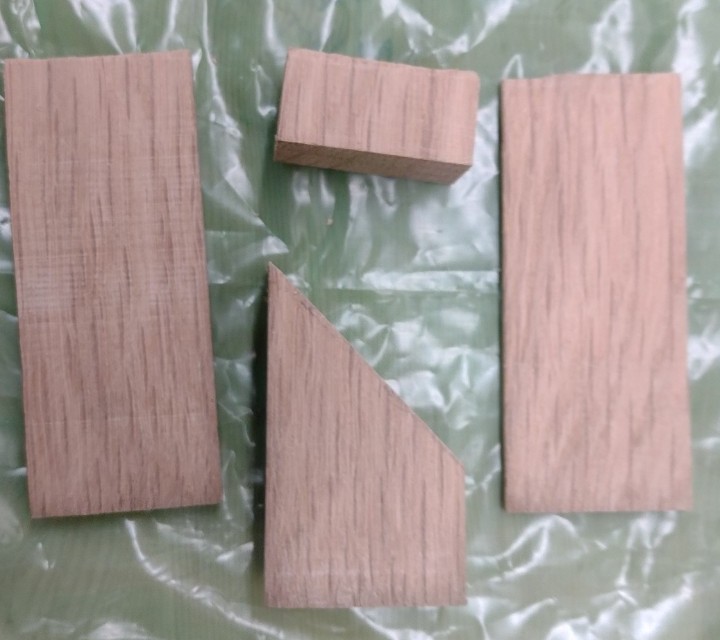
The wood is oak from an old chair leg, cut on the bandsaw and sanded to a good finish.
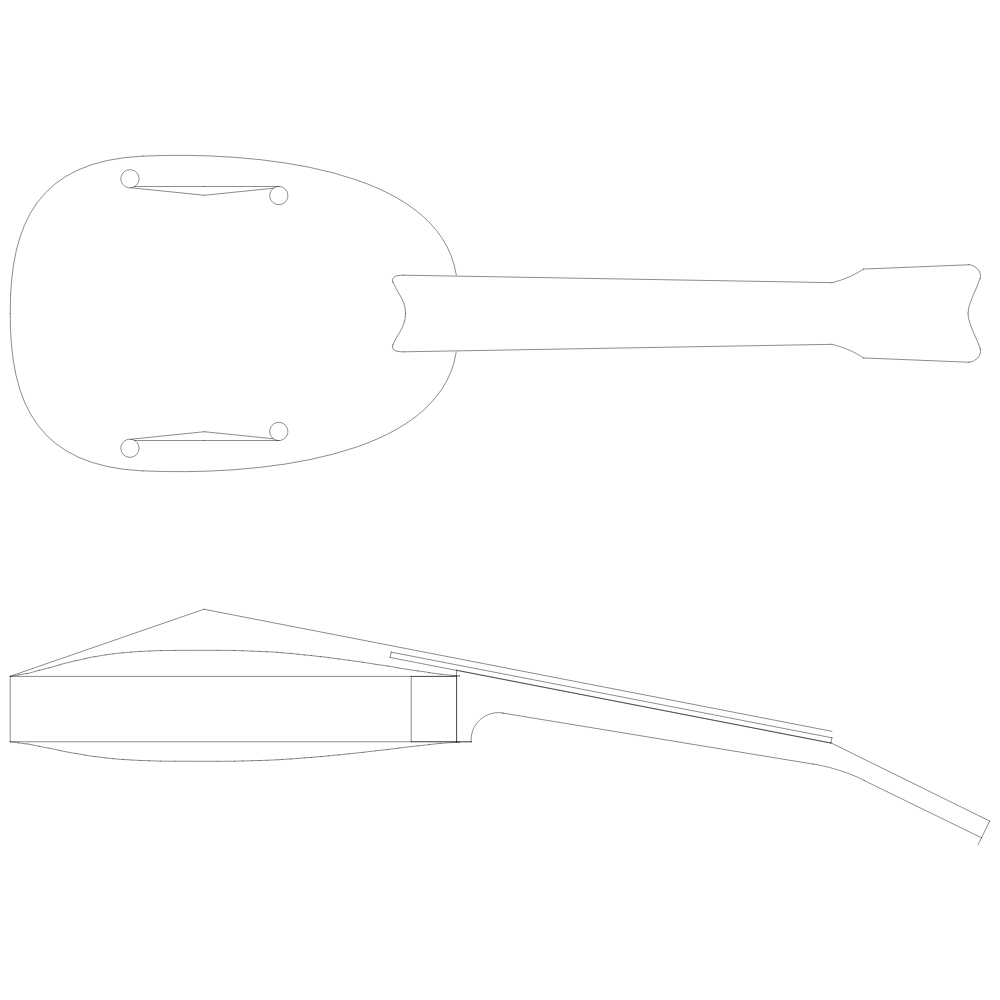
You may have heard of Ukulele Acquisition Syndrome (UAS). I’ve got Ukulele Construction Syndrome (UCS). I need to make another ukulele.
I want something that is definitively a ukulele, but a bit different. So how about an archtop pineapple ukulele?
Here’s a basic design:
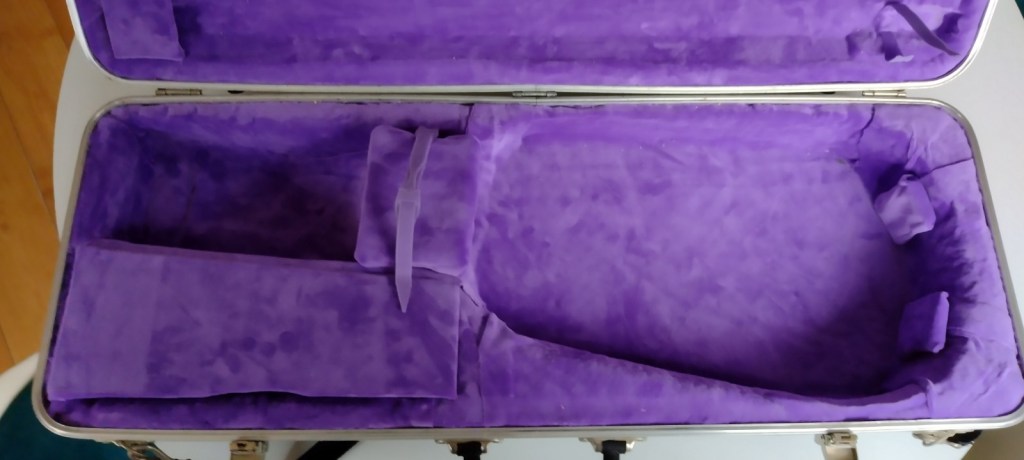
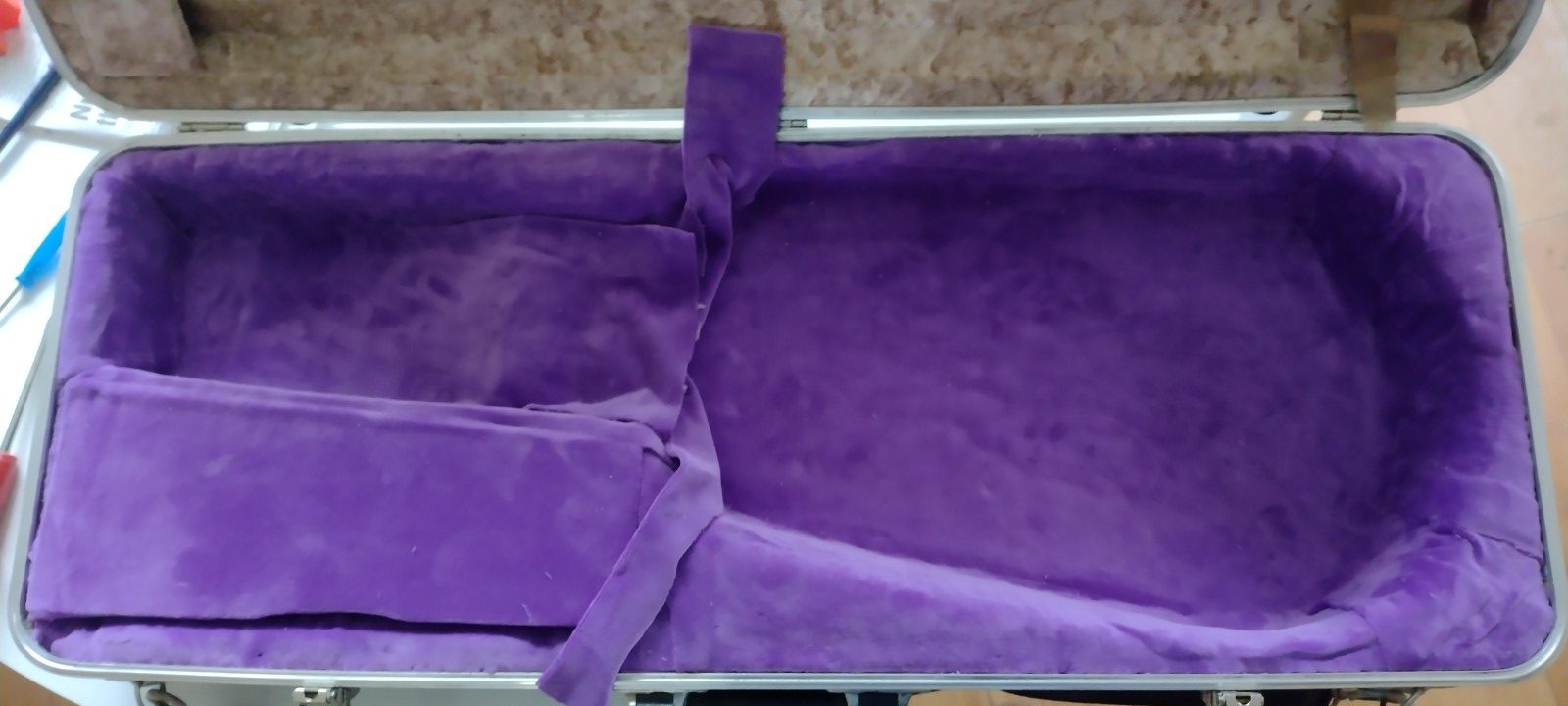
Musicians need throat sweets – you mustn’t cough during a performance. However throat sweets can escape at which point everything gets rather sticky.
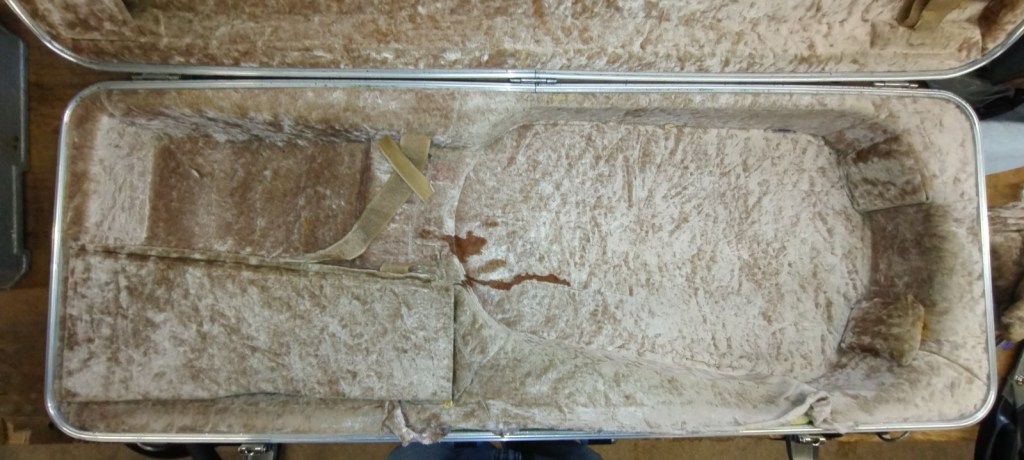
The melted sweets can be seen here escaping from the compartment in the bottom left of the picture. The case hasn’t been used for a few years as no-one wants to play a sticky viola.
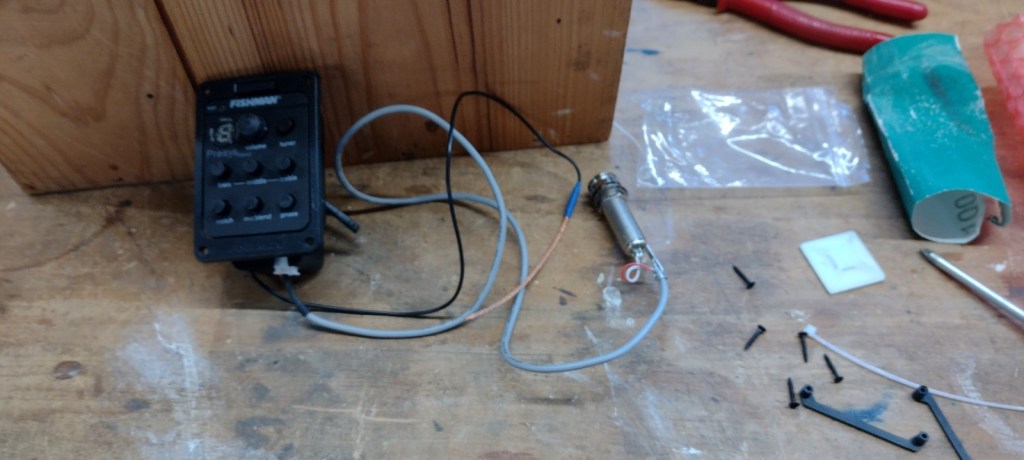
Continue readingI’ve fitted a new pickup in the bass. The previous pickup was a passive piezo and these suffer with impedance problems driving cables and amplifiers. It worked – it just didn’t sound very nice.
I did look at putting a DIY preamp into the bass, but overall it was much simpler to put an all-in-one solution in. This was the Fishman Presys Blend:
 Martin's Blog