
DIY Sopranino Ukulele Part 4 – Neck taking shape
Reply

I’ve made another front or back – will decide where to use the panels later. This one is a bit thinner – about 2mm – so maybe it would be a good front with the thicker panel for the back where the instrument is damped by the player’s body.
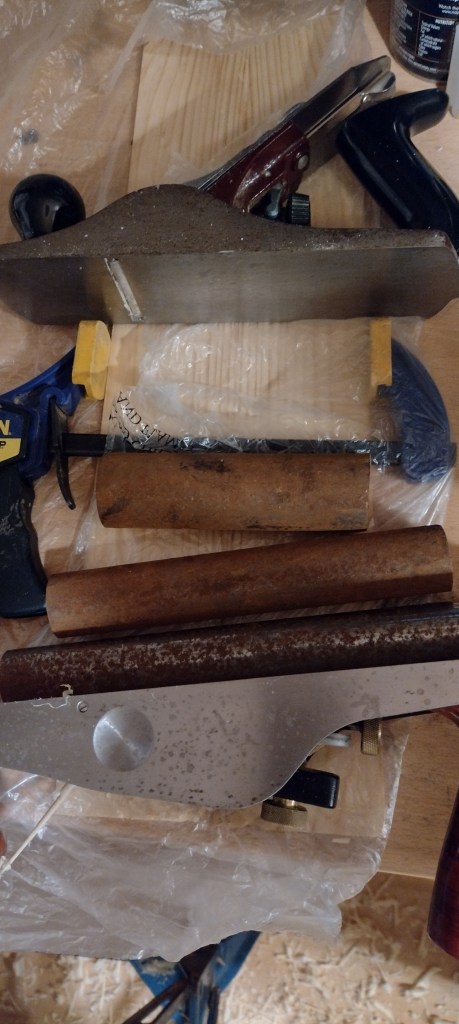
Ok – there are lots of things I’m supposed to be doing but here’s another project just for fun. I’ve long wanted a Sopranino Ukulele but I can’t really afford one, plus it would be fun to have a go at making one.
A Sopranino is smaller than a Soprano Ukulele – the Soprano has a scale length of around 13″/330mm and the Sopranino has a scale length of around 12″/305mm. One big advantage of this size is that I can resaw the timber on my mini-bandsaw which has a capacity of around 75mm.
This is the concept I came up with:

Well – if not finished at least it is working. I’ve got the sound post in (somewhat unconventional – see below) and strung it up and it sounds lovely!
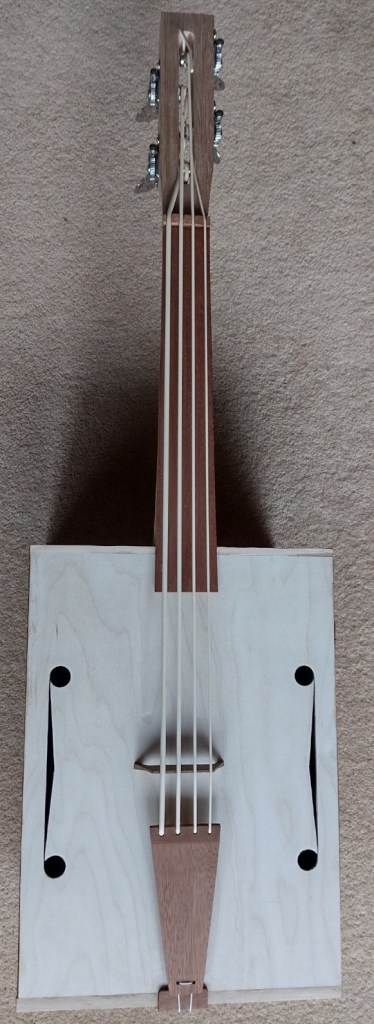
Starting to feel like it might be finished one day!
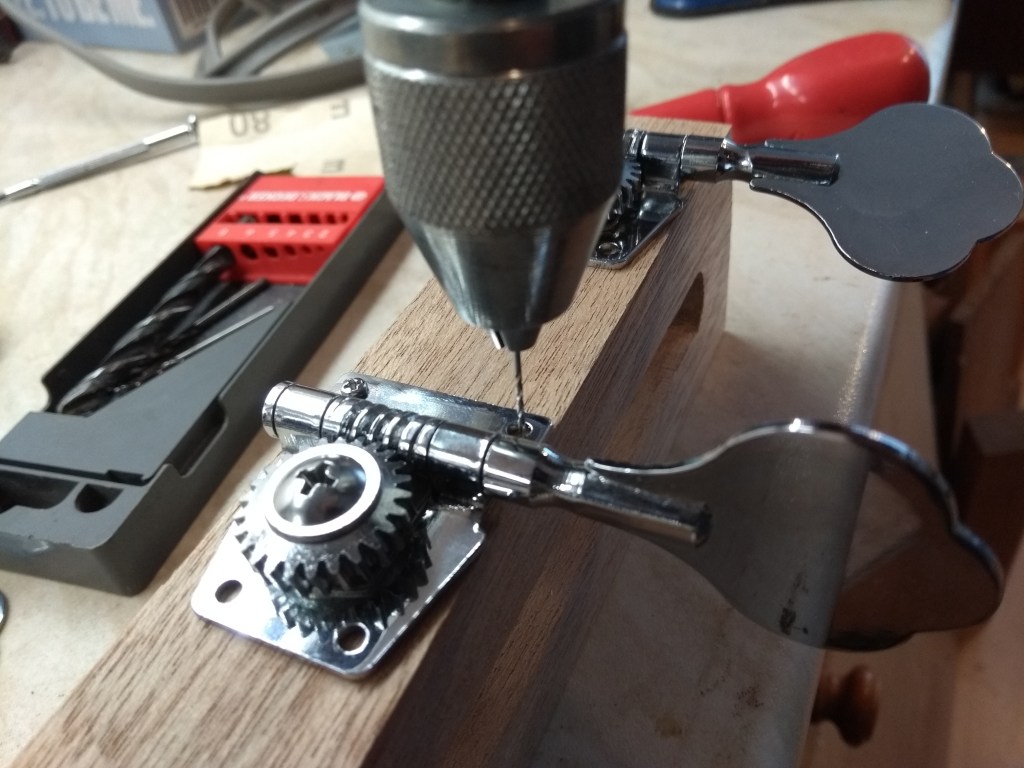
The neck is more-or-less finished. I’ve fitted the tuners (drilled out to take the larger strings) so that I could see what it all sounded like. The answer is that it sounds lovely 🙂
Continue readingI’ve cut some more bits of wood. There is:
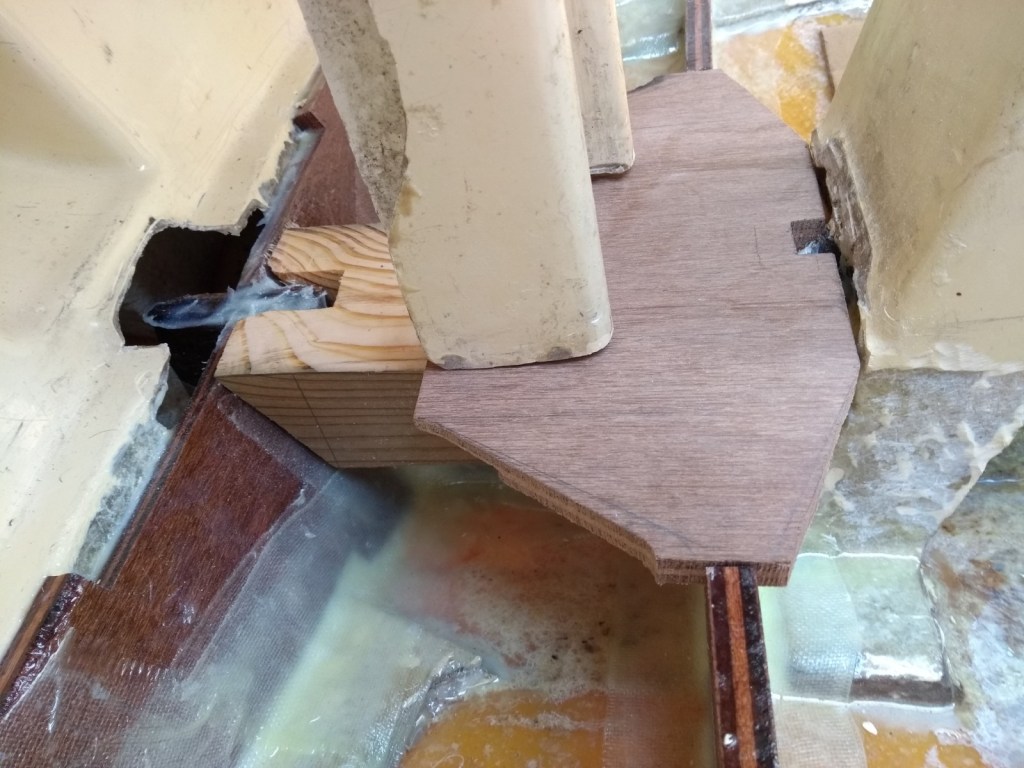
Just because I don’t have enough projects on the go 😉 I’ve started making a bass ukulele. I call it a μ-bass.
The body is an old Port Wine box. Since this wasn’t glued I’ve run Titebond around all the joints so they don’t buzz. The neck is a old piece of mahogany that has been lying around for 20 years. I bought some bass guitar tuners on eBay – I’ll need to make the slots bigger. Soundboard will be birch plywood.
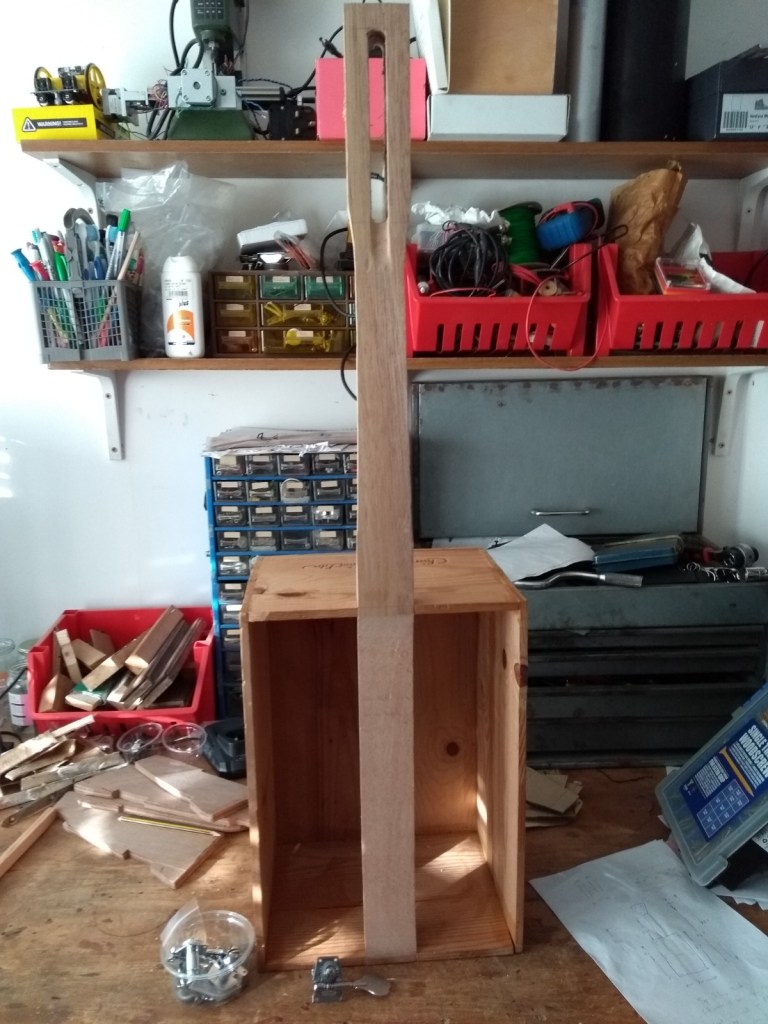
See this summary of the build.
My eldest daughter asked me if we could make a bow and arrow for her. She’d done some designs and wanted to make them.
We watched some videos on YouTube on how to make bows and had a go. The first attempt broke.

So we tried a different approach. I’d cut down an Ash sapling in the garden a few months ago – we’ve got Ash trees at the bottom of the garden so we get saplings growing everywhere. The top of this was about the right stiffness for a bow. So we cut off a suitable length and started work.
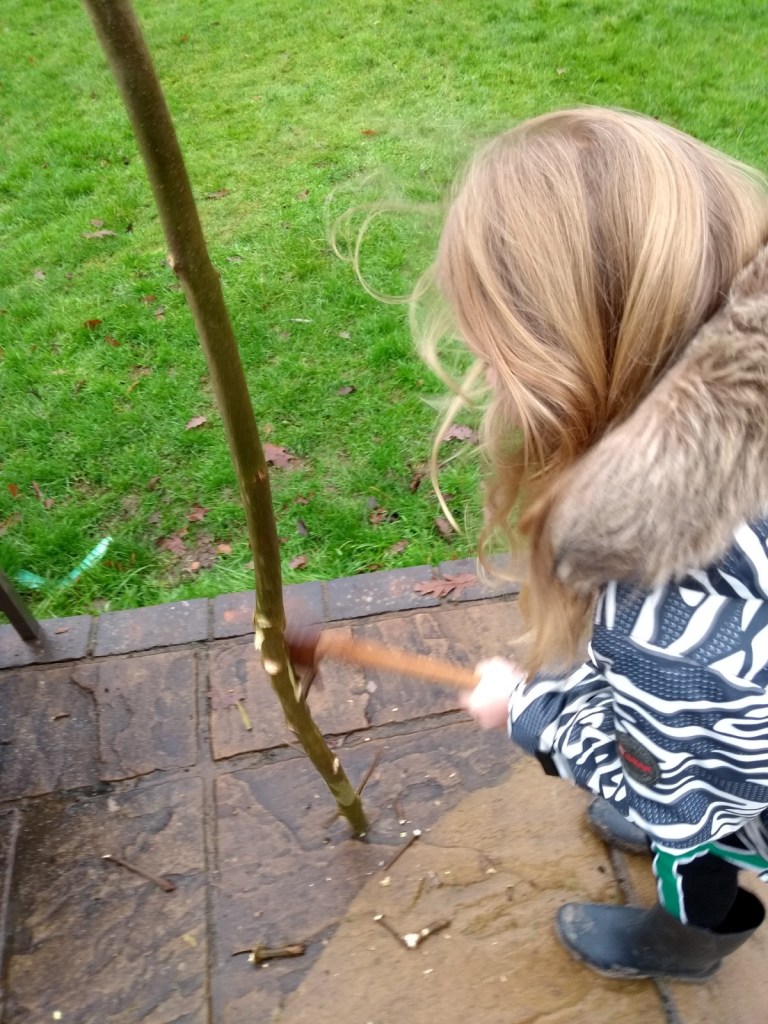
There are some key design points to making a bow. Any wood that is weak enough to bend is likely to break, so the idea is to trim the wood in such a way that it is still strong, bendy but doesn’t break.
Continue readingThe oars supplied with the Wanderer (Custard) are 6′ long. Much too short for good rowing but easy to stow and thus fast to access. As described elsewhere fast access turns out to be the most important requirement for oars – for fendering off and close manoeuvering when things go wrong.
I have another set of oars supplied with the green boat (Owl). These are 6′ 6″ but I haven’t used them much:
However they are a very good fit into Custard and the extra 6″ will help with rowing. So a bit of tidying up was in order.
Continue readingI’ve been giving some thought to how to attach the mast to the boat. There are a number of objectives:
 Martin's Blog