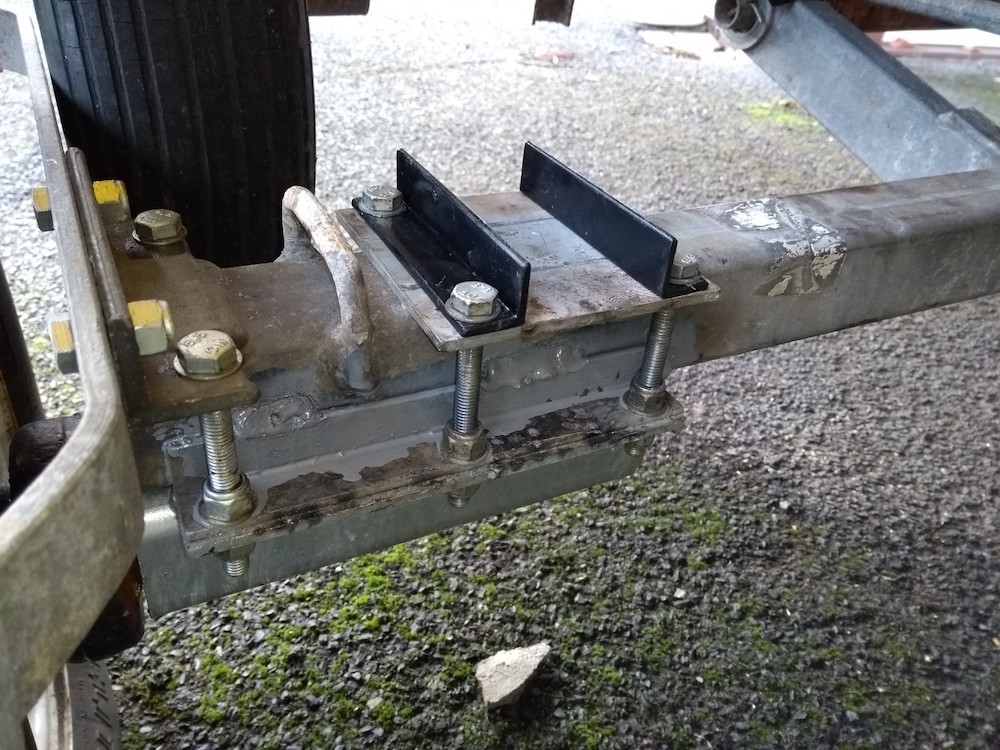
Wanderer aft cleats

One thing about sailing with small children is that you want to tie up to a jetty if at all possible. This means having usable cleats. It is possible to tie off to the traveller but having cleats is easier.

However, I don’t want the cleats to catch on the mainsheet or other ropes, This means they need to be somewhere out of the way. The best option appears to be to feed the rope through the handhold at the back of the side decks and forwards onto a cleat under the side deck.

I made up two plywood panels – one for each side – and attached the cleats using T-nuts. I’ve also added some spare T-nuts for other attachments, one spare cleat (it is always useful to be able to tie things on) and a clamcleat that will take string threaded through the scupper on the transom – this can be used for a foothold rope or for attaching the tent.
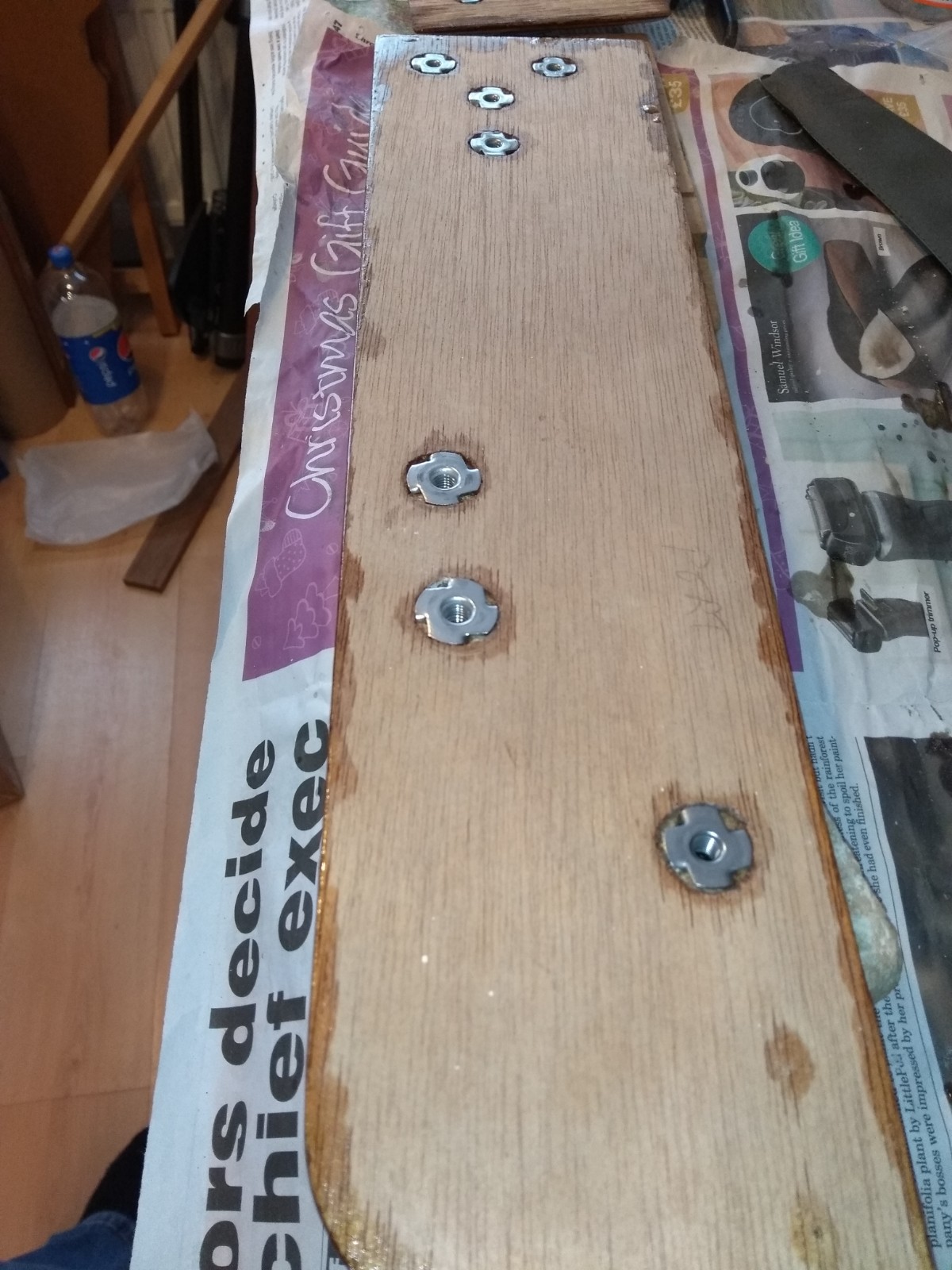
Reverse of the panel with T-nuts fitted. The T-nut recesses were sealed with thinned varnish.
Continue reading

Simpler Wooden Mast

Here’s an idea for a simpler wooden mast:

ItemHeight above heel (m)Notes
Heel060×60 square
Partners0.5790×70 rectangular
Boom0.9380×70 rectangular
Square1.570×70 square
Circle base2.470 diameter
Top5.640 diameter

This mast uses rectangular sections at the base to provide the strength. It gradulally transitions to square section, then circular sections when possible. The rectangular and square sections next to the sail aren’t ideal – the junk rig works better on a circular section mast as this allows the sail to rotate freely. However this design would be easier to make.

I’m not going to show the strength calculations here. If you want more detail please ask!

Weight isn’t too bad. Adding up the weight of each mast section we end up with 10.3kg.

More on Aluminium Tube Masts

A couple of extra points:

Suppliers

Finding suppliers for tubes that will definitely fit is proving harder than I expected. In particular I’d like a 70mm diameter by 3mm wall thickness tube for the main tube, as this should fit a 2 1/2″ inner tube with everything at its nominal size. However 70mm is very close to 2 3/4″ so 70mm is hard to find.

I’m also struggling to find suppliers who will measure what they have in stock.

Adjusting the size

I found a discussion on using Car Exhaust Tailpipe Expanders to adjust the size of an aluminium tube. Neat idea but rather scary – I’m not sure what that would do to an aluminium extrusion with a T6 temper.

However:

  • It might be possible to make the internal diameter 0.1mm larger, should that be necessary;
  • I could always wrap abrasive paper around the tool and use it to make the internal diameter larger using an electric drill on low speed.

Free-standing mast: Aluminium Tubes

Aluminium tubes are easily available in the UK and fairly cheap. Aluminium is strong, light and has very predictable properties.One issue is that aluminium is only available in lengths of 5m, so we can’t make the mast out of a single tube – we’ll need to extend it somehow.

Another issue is that cutting and welding aluminium destroys the properties – you are likely to end up with a very soft material. So we can’t cut and weld the tube to create a tapered tube – we’ll have to stick with the tubes as delivered.

Continue reading

Free-standing mast: Wooden Mast

I like making things in wood, so it is worth working through the design of a wooden mast.

A mast needs to be as light and thin as possible so large defects in the wood such as knots cannot be allowed. This means most wood in the retail market in the UK isn’t suitable. I eventually tracked down two suppliers: Robbins Timber and Sykes Timber.

There are a few types of timber that could be used, but when availability of the necessary grade is taken into account it comes down to two:

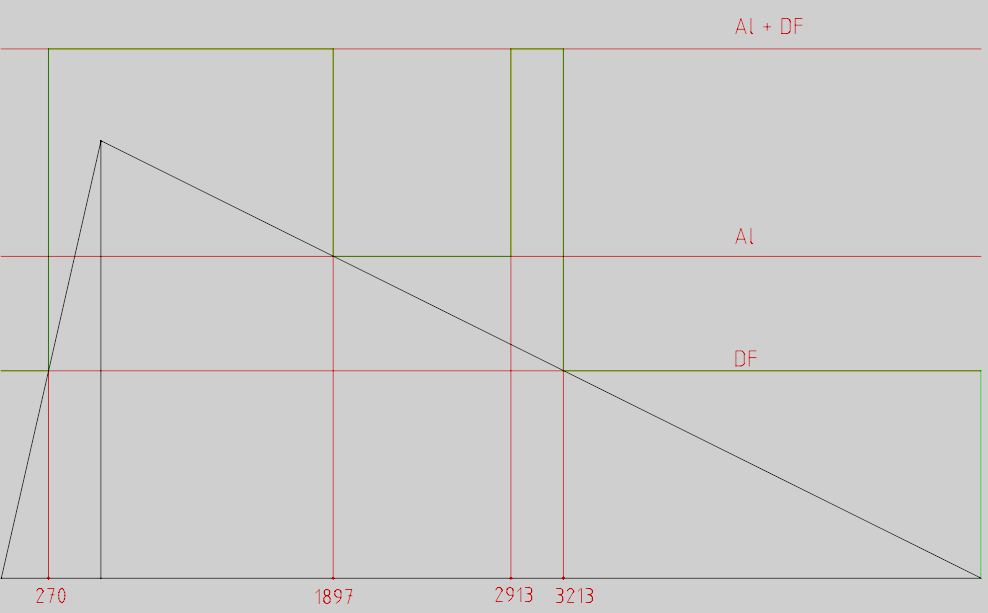
The figures for Douglas Fir are as follows:

  • Sitka Spruce. This has the highest strength to weight ratio of any wood so is the traditional wood for boat spars. However it is expensive, a bit soft and not as strong as…
  • Douglas Fir. A bit heavier for the same strength but cheaper, harder (less chafe from yard and battens) and stronger for the same size.
Continue reading