Giant Halfway Hinge Repair

My Giant Halfway is wobbling at the hinge. Not nice to ride and once this starts it only gets worse. There is a video on YouTube on repairing this, but the information there is incomplete so I thought this might be useful to share.

First step is to separate the two halves of the frame. This means removing the gear and rear brake cables before removing the pin. Not too hard, especially if you are going to replace the cables which is something you’ll almost certainly need to do anyway.

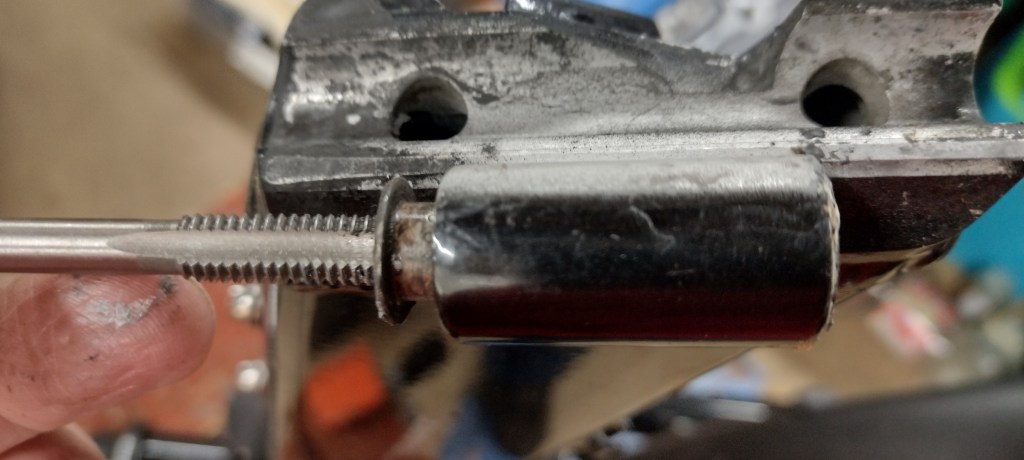
Getting the bushings out is the big problem. The inner bushings pulled out by inserting an 8mm tap and pulling – this is probably where the wear is – around the bushings in the frame rather than the pin. Anyway, easy.

Easy – just pulled out
Continue reading

Thorn Me’n’U2 Electric Conversion Part 2

Some progress on the conversion.

Pedal Sensor

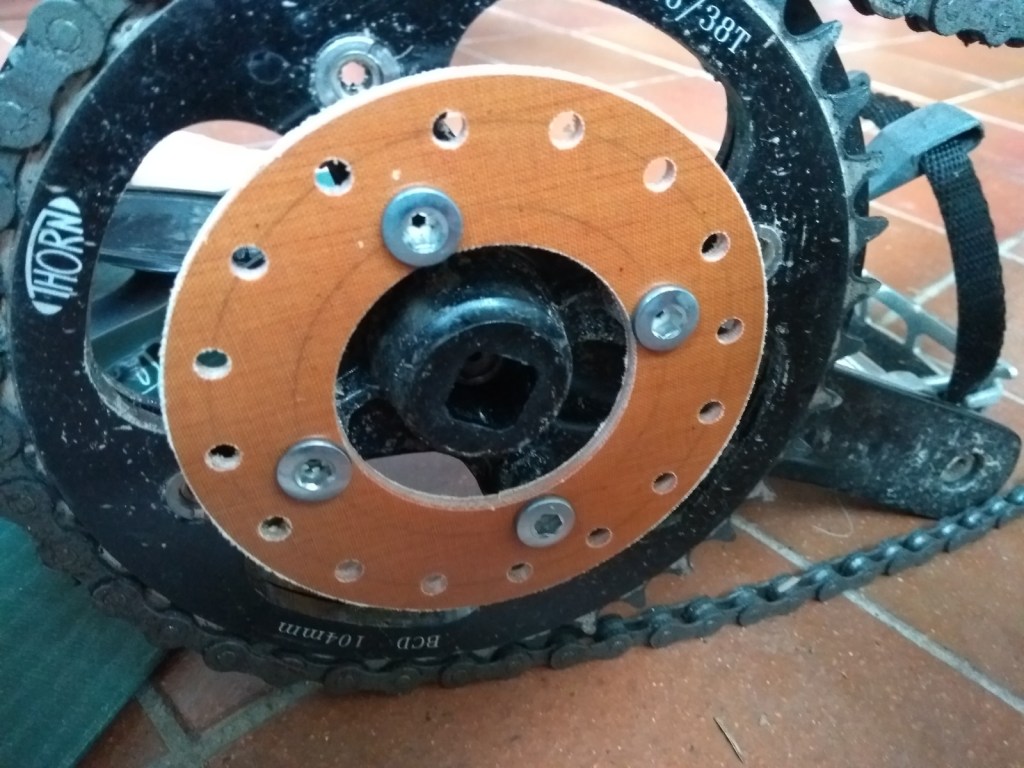
I’ve made a new pedal sensor rotor and sensor mount. I wanted a bigger rotor so that the sensor could be positioned outside of the radius of the tandem eccentric bottom bracket. Not knowing exactly how the sensor worked I kept the same distance between magnets, so the rotor now has 16 magnets instead of 12. The rotor is made from Tufnol as I had some, it is non-magnetic and glues well.

Test fitting the new rotor on the front crankset

The rotor bolts onto the drillings for the inner chainring. Most bikes will either have an inner chainring fitted or (for a tandem) a simple crank arm. The triplet tandem is probably unique here. I’m not sure if it makes any difference but I did make sure that the magnets are the same way round as the original rotor.

Continue reading

Thorn Me’n’U2 Electric Conversion

The bike is fantastic, however pulling a total of about 180kg up long hills leaves me worn out. It is ok until I hit bottom gear but at that point there is nowhere else to go other than leg power. We’ve always got up the hills – and I am definitely fitter and stronger than I was – but with my partner having an electric bike she has been suggesting routes that I don’t want to do due to the number of hills. I’d like to be able to ride further without worrying about the hills. I’m also curious about the kits and how they would work in practice.

So I did my research and bought a BPM kit from Woosh. Woosh have a great reputation and Andy’s patient answering of my innumerable queries has been outstanding. The BPM motor has a good reputation for lugging heavy bikes up steep hills where other motors simply melt – very important given that I’m expecting this motor to cope with pulling anything up to 250kg up 17% (1:6) hills. It is a front wheel motor; as mentioned before the rear wheel of the bike doesn’t have much weight on it and I get wheelspin on slippery surfaces with pedal power.

The kit arrived promptly and quality was good.

Continue reading

Mast partners sorted!

Figured out how to secure the mast at the partners. The rear chock now is ornamented by two bits of aluminium:

  • A plate on the bottom at the back to stop the back rising when the chock is pulled towards the mast;
  • A lashing point on the top of the block.
Rear mast chock with aluminium bits

In use it works like this:

Mast lashed in position

This is quick and easy to set up and very secure. I can lift the bows of the boat by pulling on a line to the mast top without any sign of the mast or chocks moving. As with all these things, once you figure out how to solve the problem it is easy and obvious.

Update 26/10/2023

I found that the block had a tendency to tilt and jam over the course of a few days, so now I leave the block out and just lash the mast to the front support. This doesn’t look as nice but works fine.

Mast update

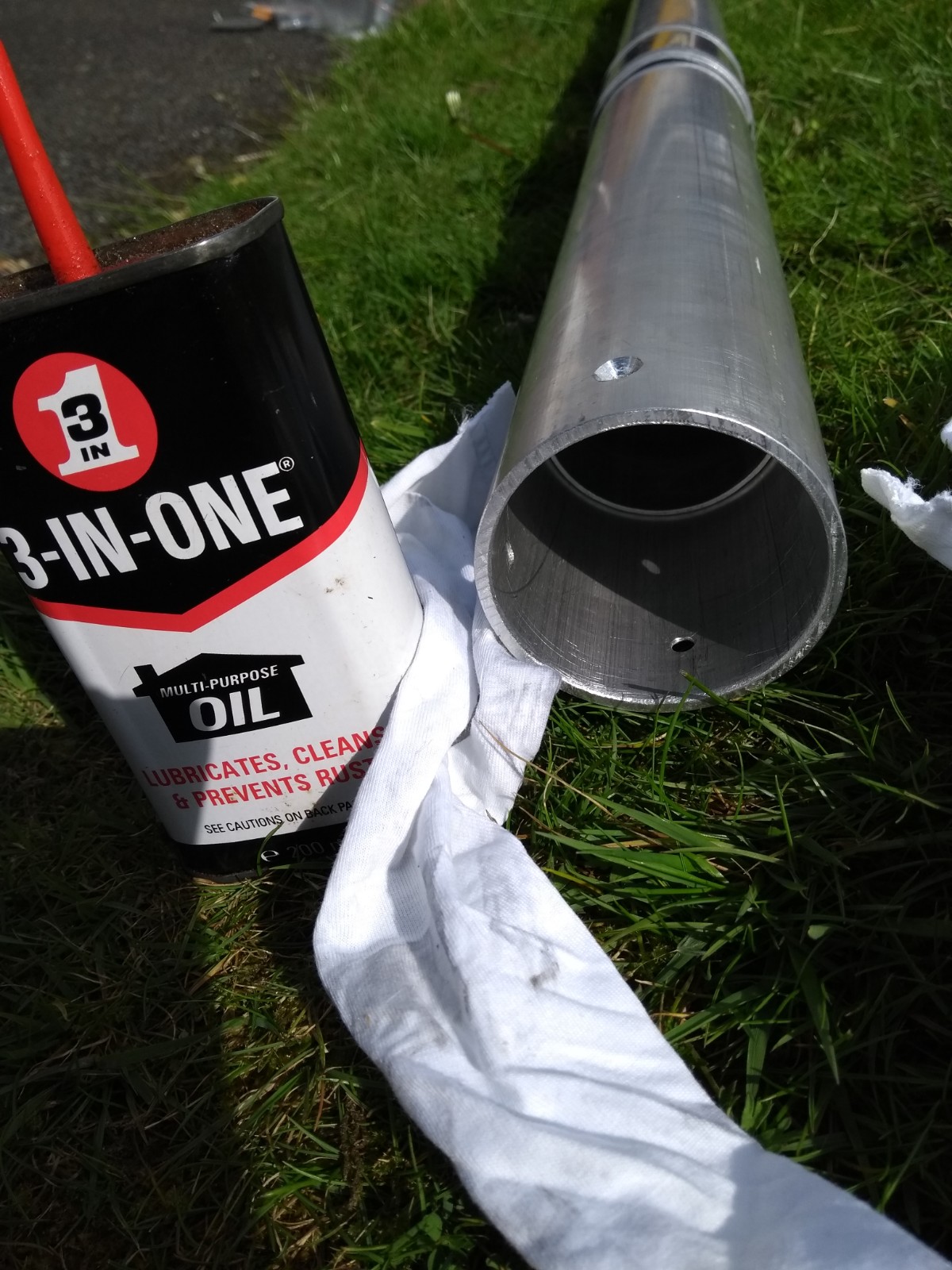
Got the mast strengthener in today. I was assuming that it would just slide in; however it jammed after a bit probably due to grit somewhere. Every time I took it out and cleaned it up (filing off the scratches) it jammed again, so I hammered it in using a wooden mallet. Fortunately it went all the way in without jamming completely. Phew.

Strengthener in with the aid of 3-in-one oil and a big hammer

I put the mast foot back on with locktite thread lock on the screws – I don’t want them coming out under sail.

Continue reading

Fitting the free-standing mast

I’ve started fitting the mast to the hull. First off the heel fitting.

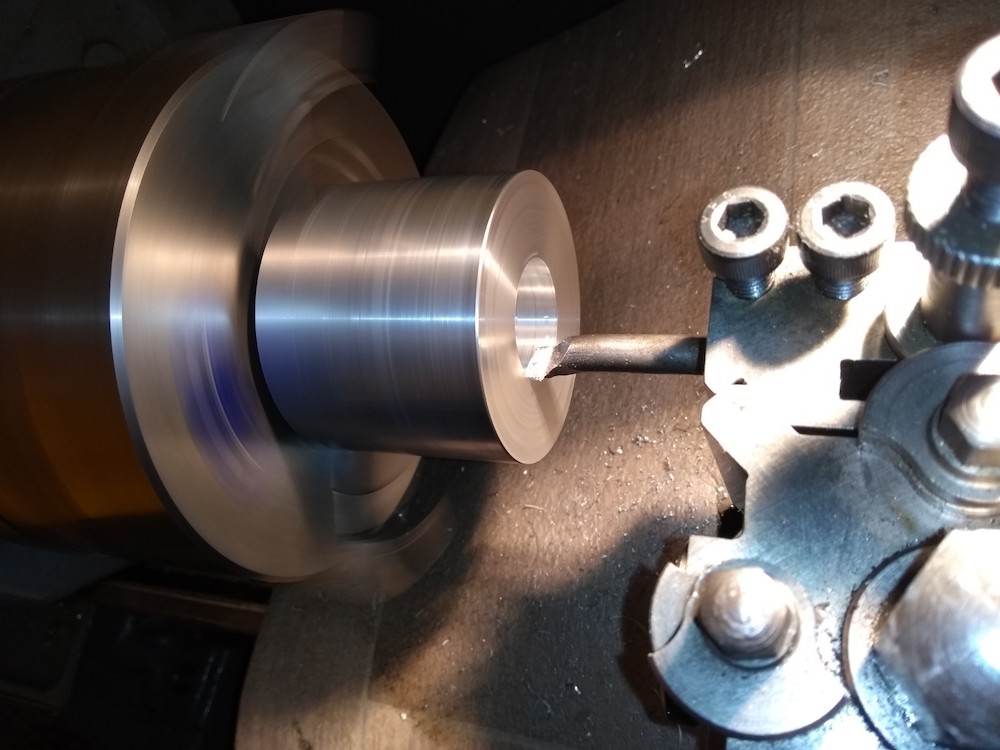
The heel is bored out to make it a bit lighter
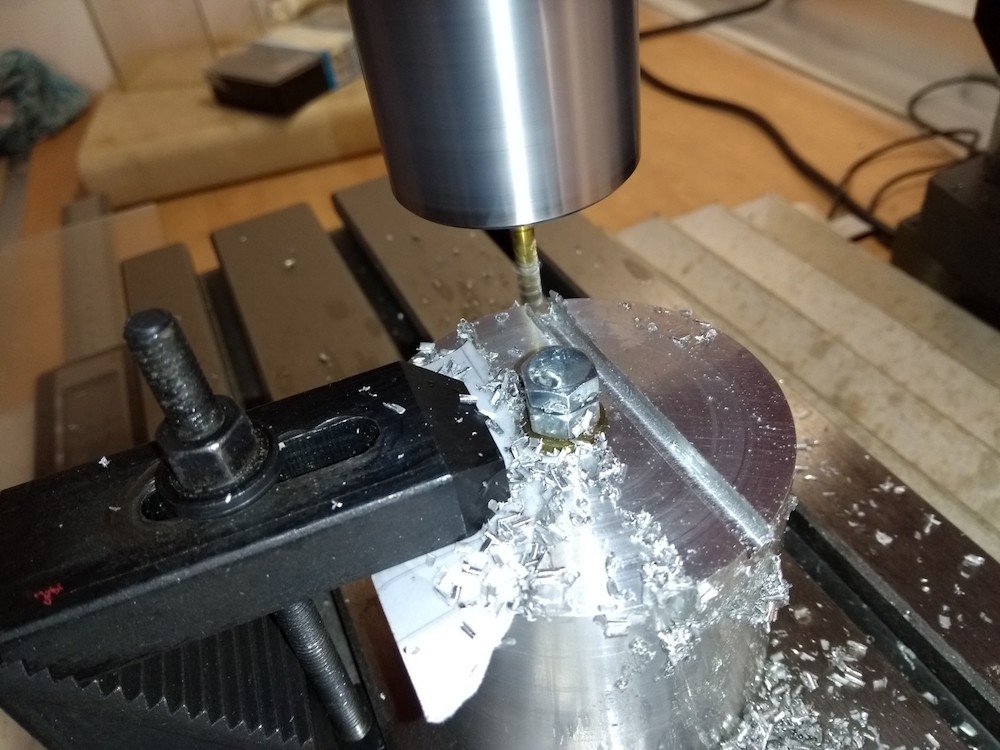
Cutting the slots for the mast rack
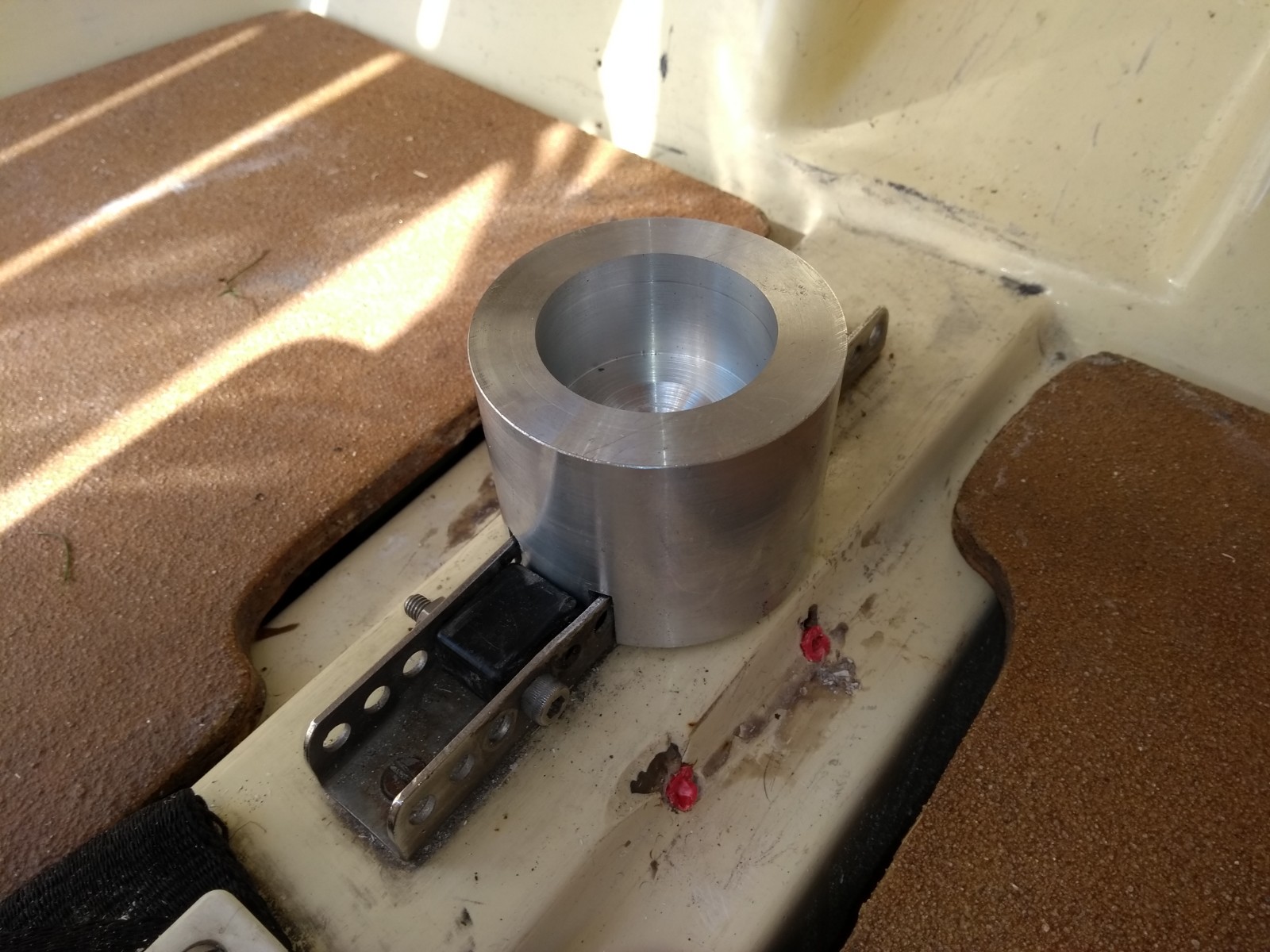
Heel fitting on the rack

Update 26/10/2023:

Please note that the Wanderer hog probably isn’t strong enough to take the loads of a free-standing mast, and the consequences of failure could be extreme (death, severe injury). I’ve left this page here for historical interest, but please see my later pages for details on reinforcing the mast foot.

Continue reading

Free standing aluminium mast – design tweaks and cutting the tubes

Right – time for a deep breath. This is where the designs become reality. First stage is check the design to get it as good as possible.

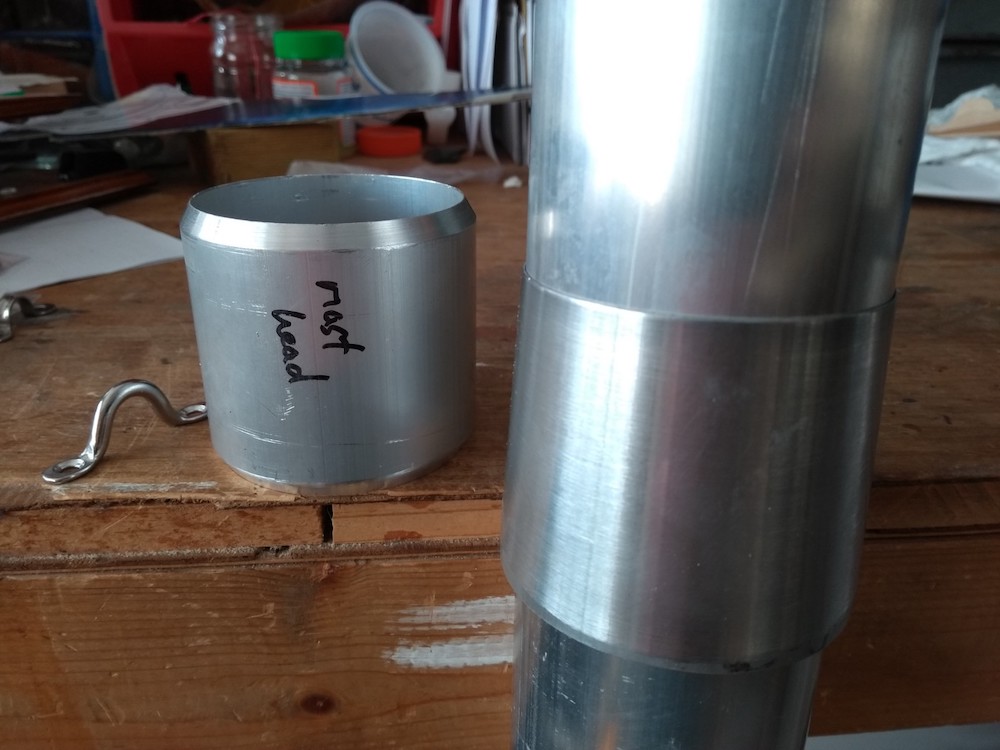
Mast head

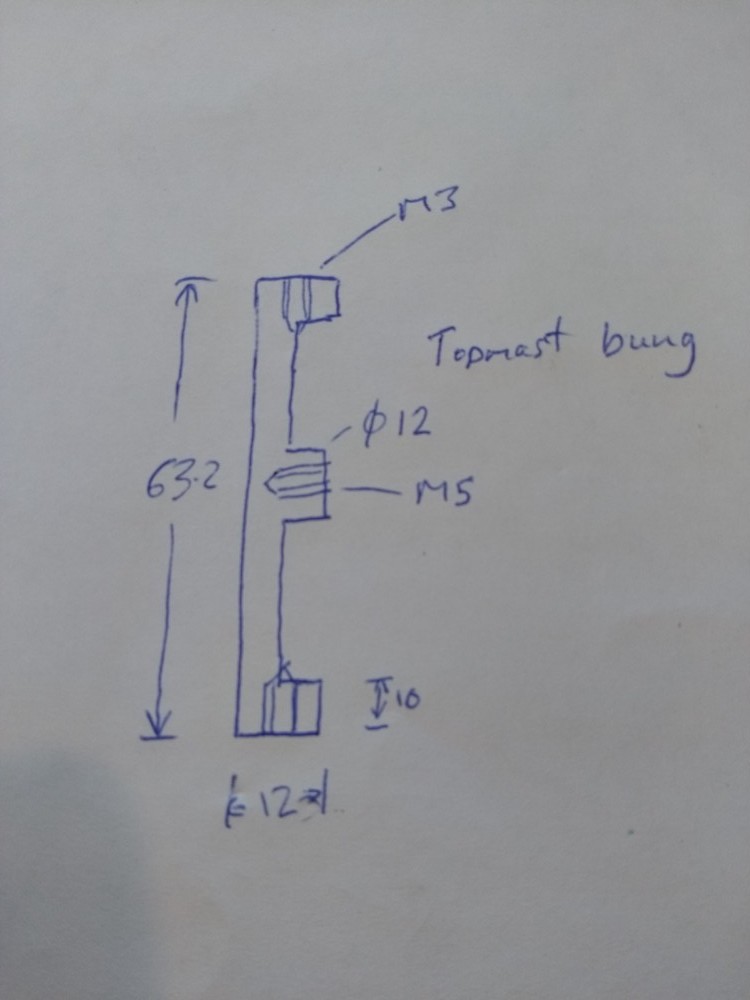
The topmast tube needs to be extended a bit for the mast head fitting. The length for the stress calculations remains the same – 5.6m – but the overall length is a bit longer to allow for the masthead bung and the loops for the masthead blocks

Topmast

The main 2 3/4″ x 10swg tube is heavy when 5m long. To make the mast lighter where it counts I tweaked the topmast length and made it a bit longer and the main tube shorter. The trade off is that this reduces the strength at the base of the topmast. This should be ok as some of the load is distributed over the length of the mast plus as soon as the sail is reefed the load in the topmast decreases dramatically.

Mast foot

I’ve tweaked the design of the foot. The main tube (2 3/4″ x 10swg) will go all the way down to the heel fitting. The strengthener will stop a bit above the heel fitting. Theoretically the strengthener could stop at 395mm above the heel, but in practice I’m going to take it down to 100mm above the heel. The primary reason is that I want lots of strength at the mast pivot point.

Mast pivot

The Wanderer features a tabernacle with a pivot that makes putting the mast up much easier – a one-person job. Given that it will just be me on my own putting the mast up it makes sense to keep this feature. The similar GP14 without a pivot requires two people to put the mast up safely.

The issue is where to put the pivot on the mast tube. Drilling a hole through the tube is by far the simplest route but will weaken the mast in a highly stressed location. Ideally the pivot should be clamped to the mast but this raises other issues:

  • The mast might hit bits of boat as it goes up and down. Clearance in the hull was designed for a centre-pivot.
  • It is a lot more work unless I can think of a clever way to do it.

I’m going to reinforce the mast at the pivot point with some internal Scots Pine. This shouldn’t be too hard to do and means if I need to drill right through it should be strong enough. I need to have a play with a section of tube in the boat to find out how it will all fit together.

Continue reading