Giant Halfway Hinge Repair

My Giant Halfway is wobbling at the hinge. Not nice to ride and once this starts it only gets worse. There is a video on YouTube on repairing this, but the information there is incomplete so I thought this might be useful to share.

First step is to separate the two halves of the frame. This means removing the gear and rear brake cables before removing the pin. Not too hard, especially if you are going to replace the cables which is something you’ll almost certainly need to do anyway.

Getting the bushings out is the big problem. The inner bushings pulled out by inserting an 8mm tap and pulling – this is probably where the wear is – around the bushings in the frame rather than the pin. Anyway, easy.
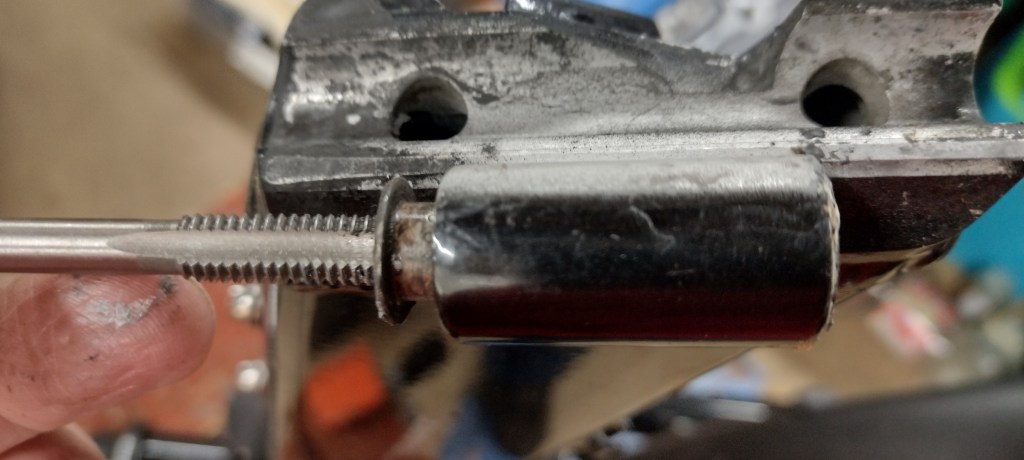
Easy – just pulled out
Continue reading

Engineering Conciousness

Something a bit different – an engineer’s view of conciousness.

Every so often I see articles on the Internet explaining conciousness in terms of vibrations or quantum theory. However, I think these are over complicating the issue. We can approach the problem from an engineering viewpoint and I think the reason for conciousness emerges.

This isn’t an idea I’m claiming for my own – I came across it when researching robotics in the 1990s. However, I haven’t seen it explained anywhere recently so it is probably worth writing down. If you can spot holes in the idea then please comment below.

TLDR: conciousness is a necessary part of creatures that learn how to interact with the world.

A simple problem with a simple robot

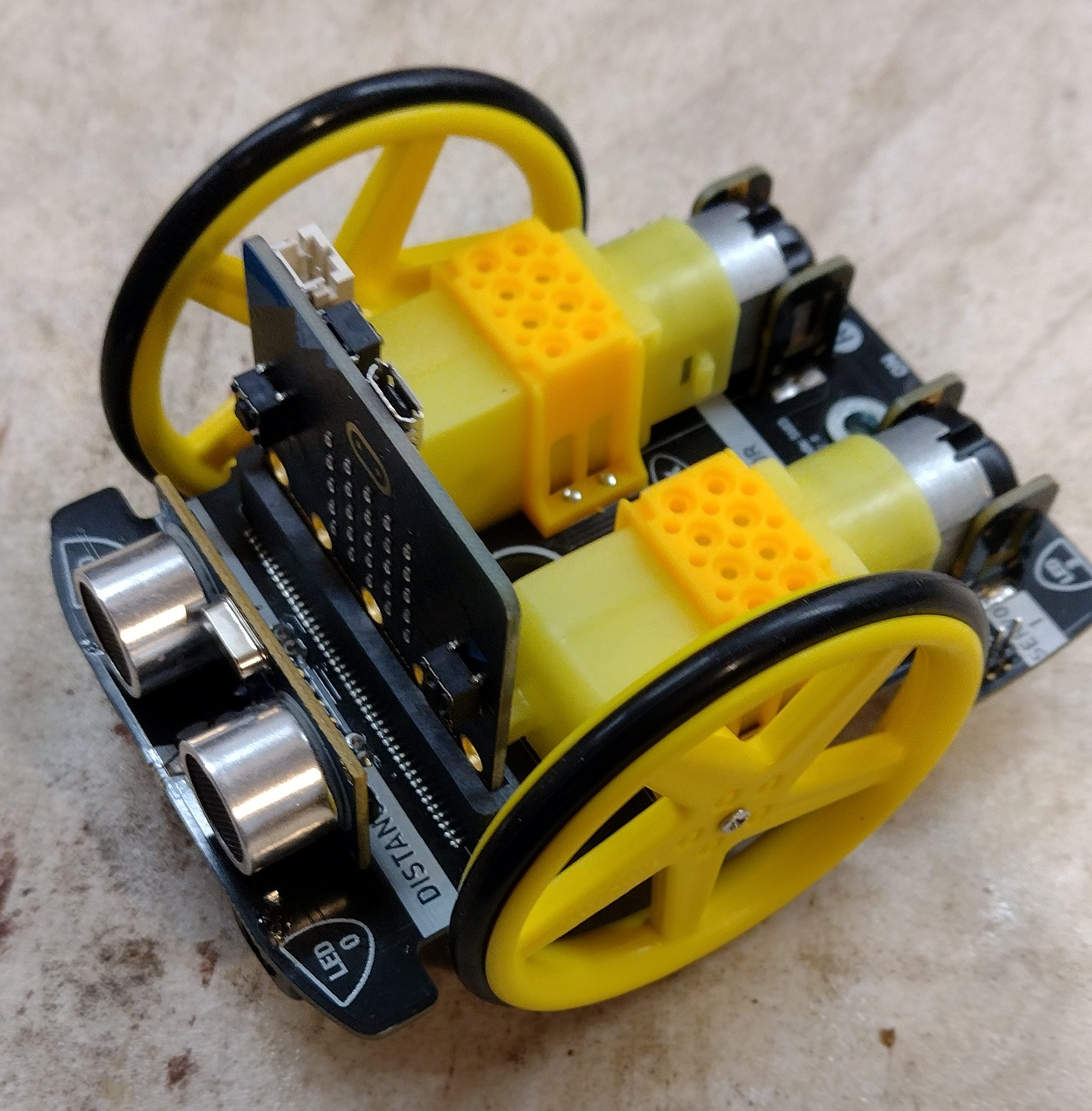
Imagine a simple mobile robot. It has:

  • Not much weight – it doesn’t matter if it bumps into things
  • Two motors driving two wheels
  • Two touch sensors – one at the front at the left and one at the front at the right.
  • Some kind of neural network that connects the touch sensors to the motor controls.
  • Programming that tells the robot that it must keep moving forward, so that if it stops it needs to reprogram its neural network so it can move forward.
Small, light robot

We put this robot into a maze and see what happens.

If we’ve got it right (and there are no dead ends – discussed later) then the robot learns to turn left when the right touch sensor hits something, and turn right when the left sensors hits something.

Robot learns to turn right when left bump sensor hits something
Continue reading

Kids longbows

My eldest daughter asked me if we could make a bow and arrow for her. She’d done some designs and wanted to make them.

We watched some videos on YouTube on how to make bows and had a go. The first attempt broke.

Broken bow. Wood wasn’t great and was too thick when I test pulled the bow.

So we tried a different approach. I’d cut down an Ash sapling in the garden a few months ago – we’ve got Ash trees at the bottom of the garden so we get saplings growing everywhere. The top of this was about the right stiffness for a bow. So we cut off a suitable length and started work.

Trimming the side branches with an axe – watch those feet!

There are some key design points to making a bow. Any wood that is weak enough to bend is likely to break, so the idea is to trim the wood in such a way that it is still strong, bendy but doesn’t break.

Continue reading

Vitruvius on lead pipes

I recently received a copy of Vitruvius’s On Architecture. This is a guide for professional engineers written in about BCE10. Vitruvius worked for Julius Caeser and was granted a pension by Augustus.

The first impression is of a modern attitude towards engineering. Whilst some of the conclusions are not in alignment with modern thinking the overall impression is that you could take this book, follow the instructions and the results would be satisfactory. The theory as to why you should do certain things is dubious, but the conclusions seem sound.

I’ve only browsed the book so far, but my biggest surprise is that he says lead pipes are poisonous:

Besides, water from terracotta pipes is much more healthy than that taken through lead pipes, which seems to be particularly damaging seeing that white lead, said to be harmful to the human organism, derives from lead.

So it is obvious that water should never be conducted in lead pipes if we want it to be beneficial to our health.

This was over 2000 years ago. I’d always thought that lead being toxic was a modern discovery. I grew up with:

  • Leaded petrol
  • Lead in paint
  • Lead water pipes (lots still around and in use)

So I am boggled that lead was known to be a problem over 2000 years ago!