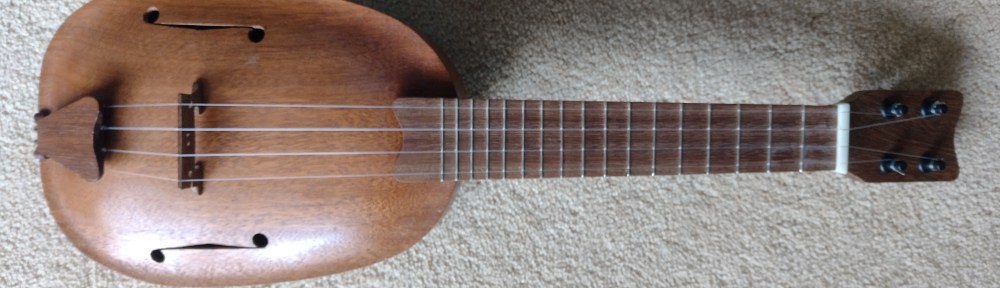
The uke is now playing 🙂
Some more pictures…
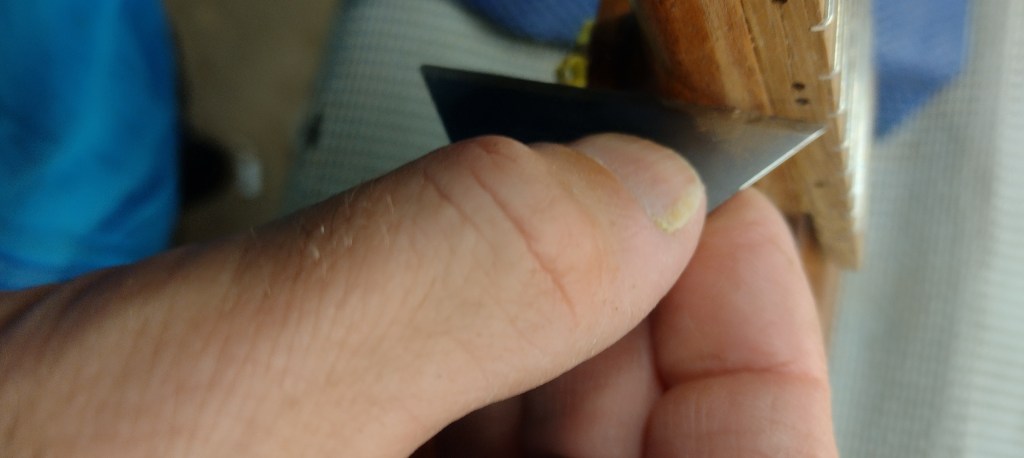
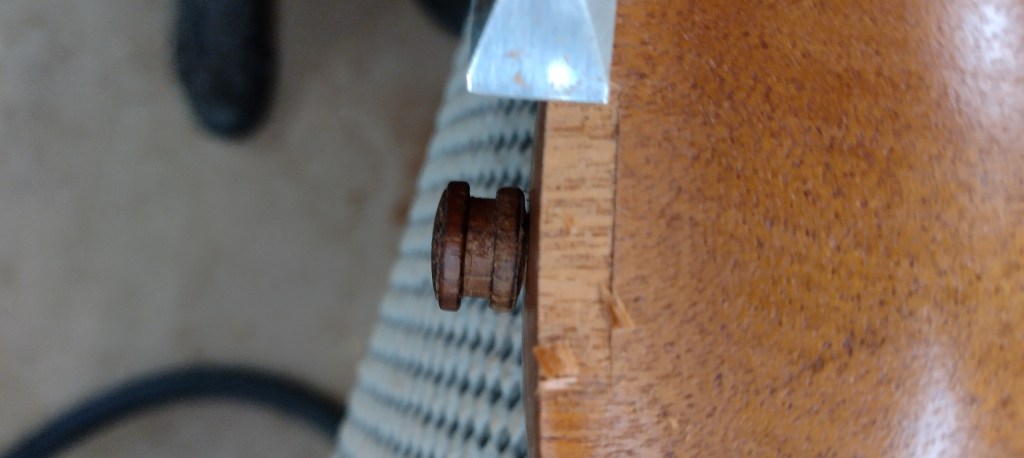
Old Stanley Knife blades made excellent scrapers! The steel is good quality and nicely hardened, plus I’ve always got lots of old ones around. They make a nasty crunch when burnished but work well and hold an edge for ages.
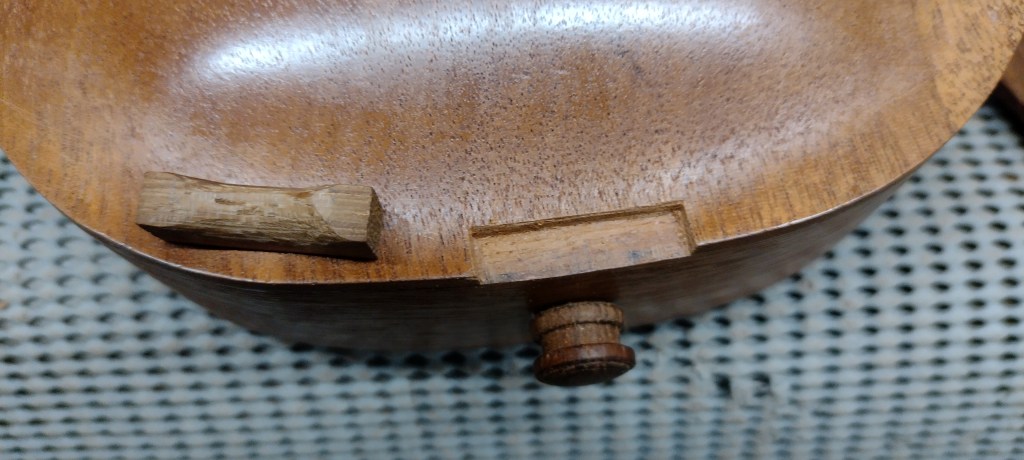
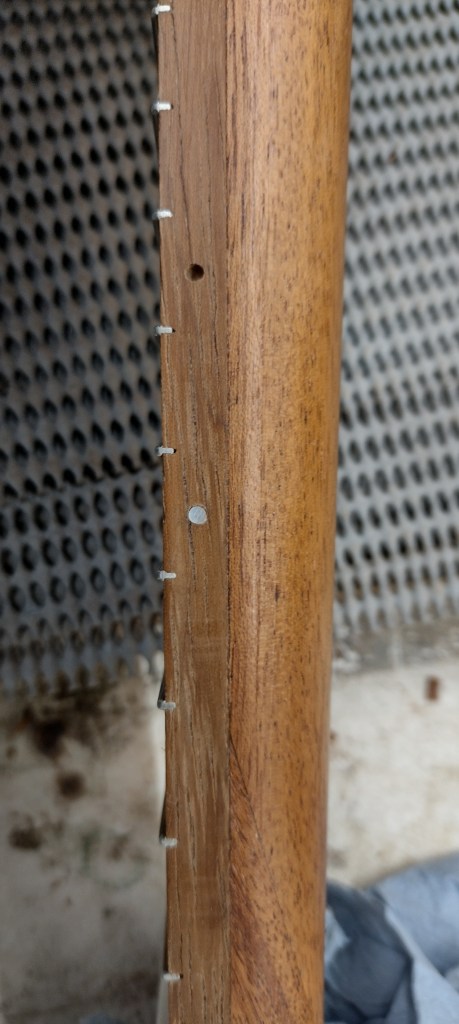
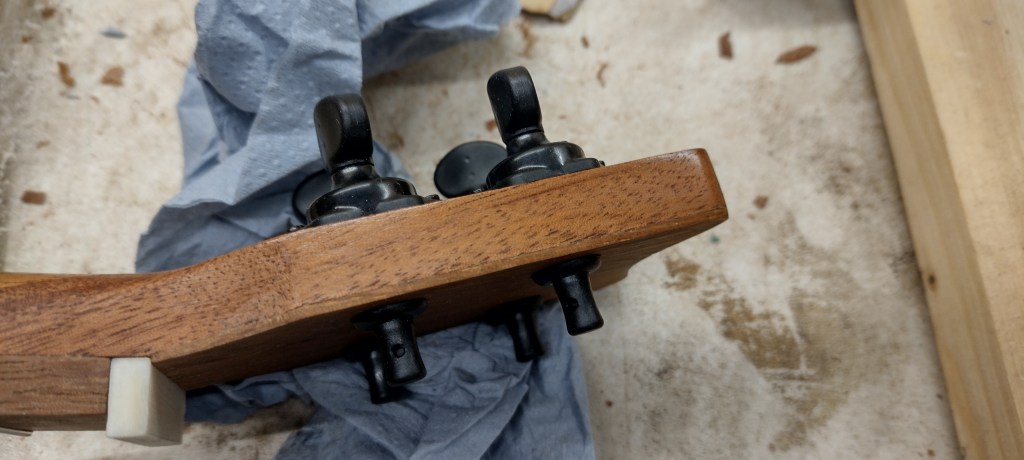
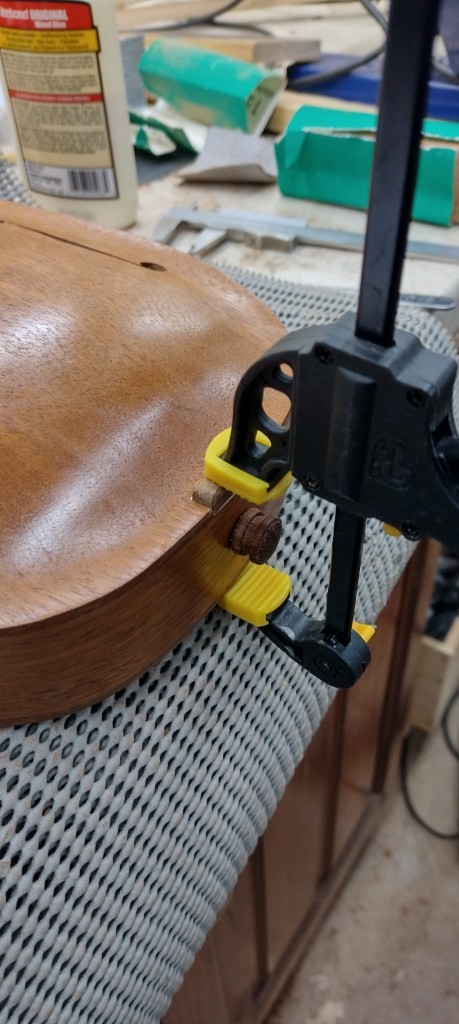
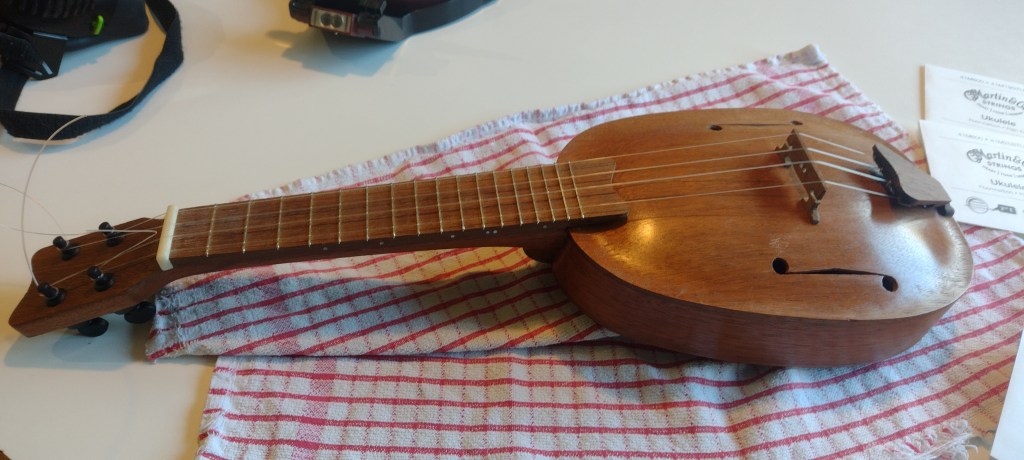
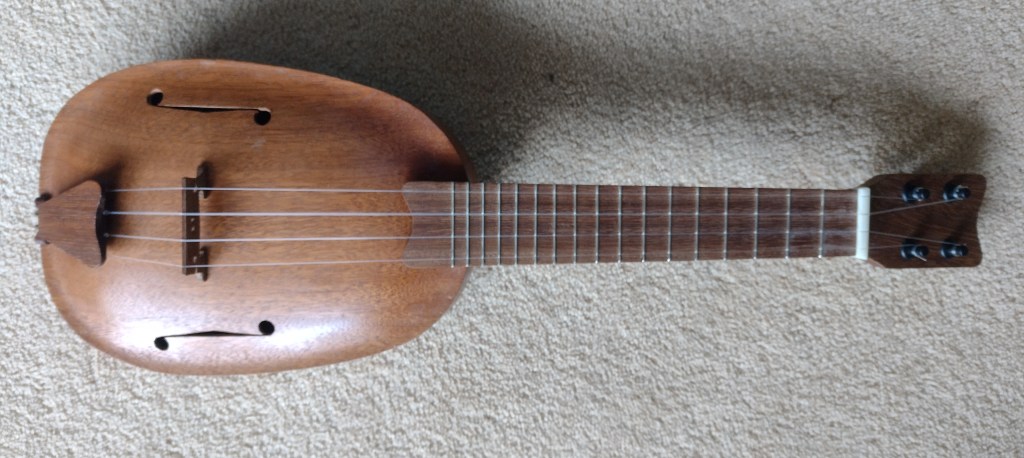
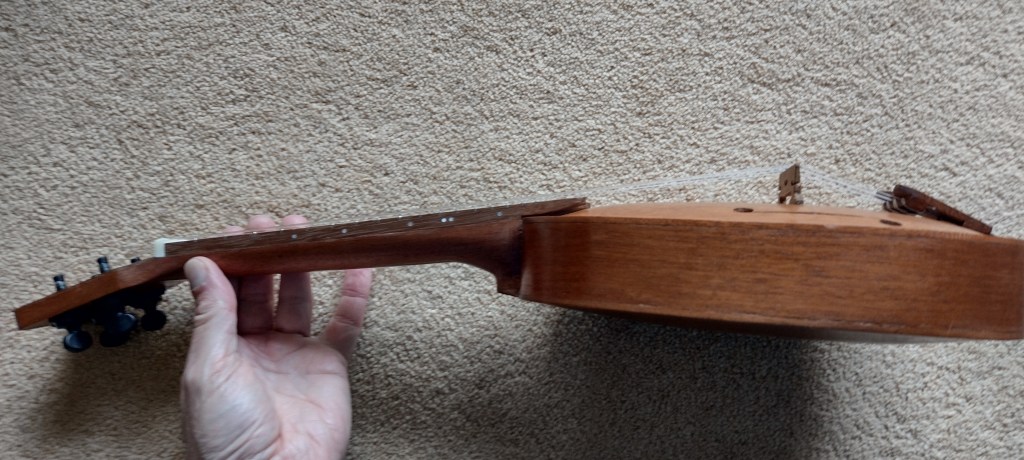
Does it work?
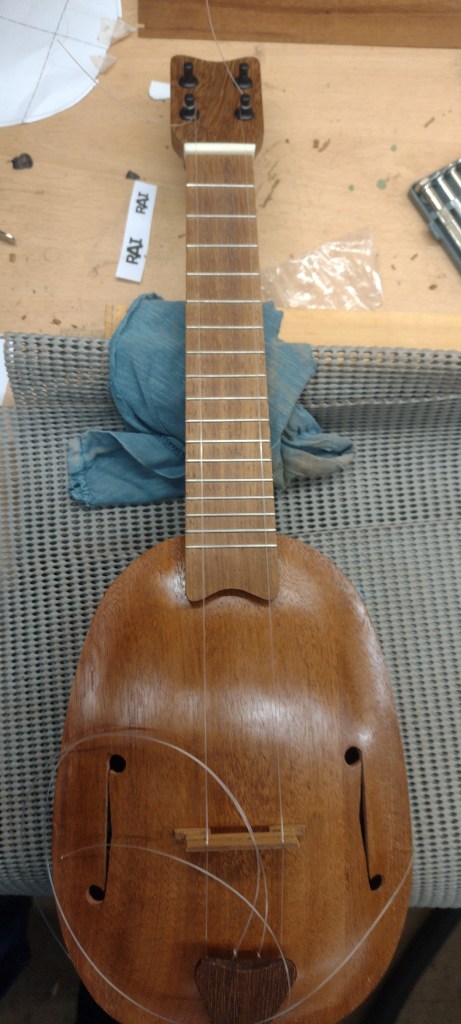
For a first attempt I’m happy with it.
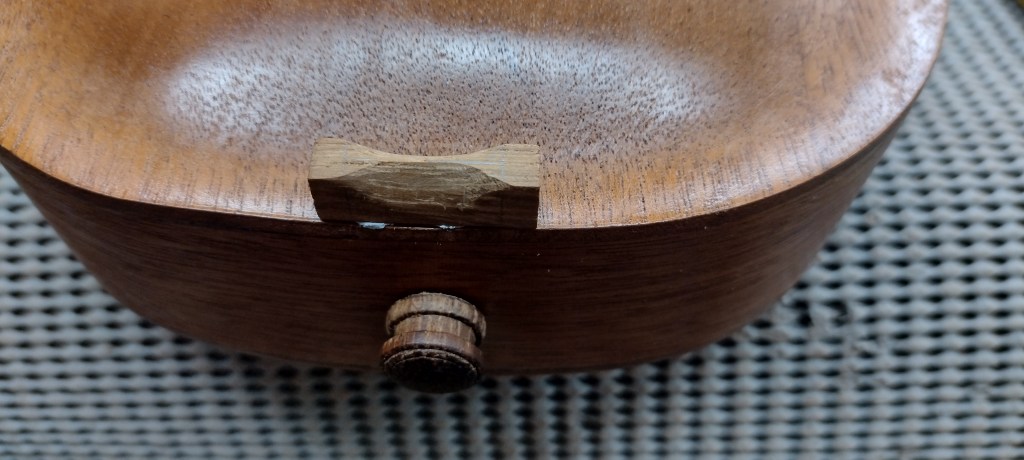
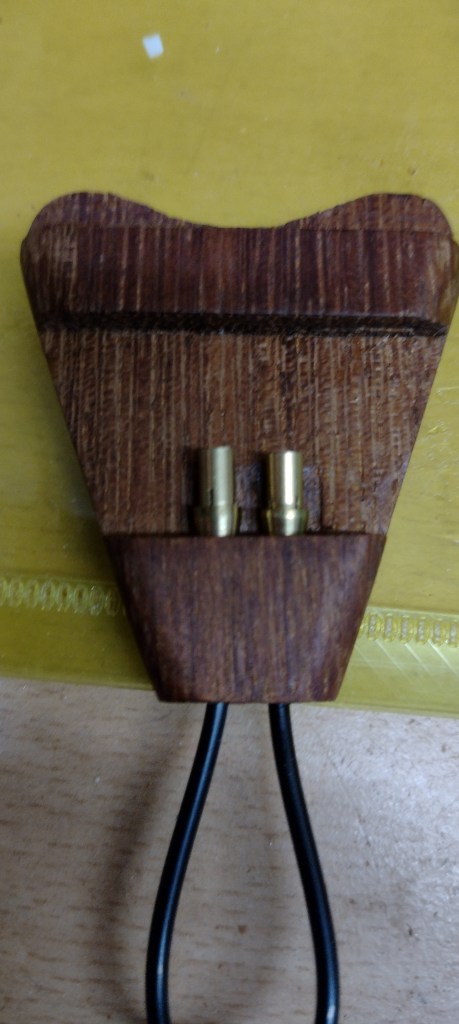
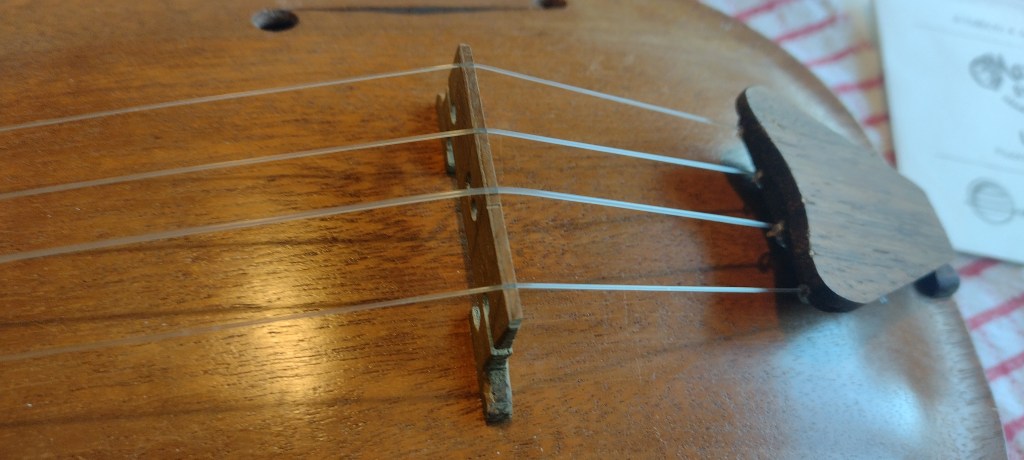
I think it looks nice – very baroque. I’m particularly happy with the look of the bridge.
The sound with the Martin fluorocarbon strings was too harsh. I’ve changed these to Addario Black Nylon strings which are much warmer, giving the instrument a better balance. I’m confident I can get the instrument better balanced. For example the back isn’t right – it should have a tap-tone similar to the front. The arching on the front is too high. The front might be too thick – hard to know without making another instrument. But overall the instrument plays nicely. Lower tones are very rich but it retains the percussive soprano uke sound.
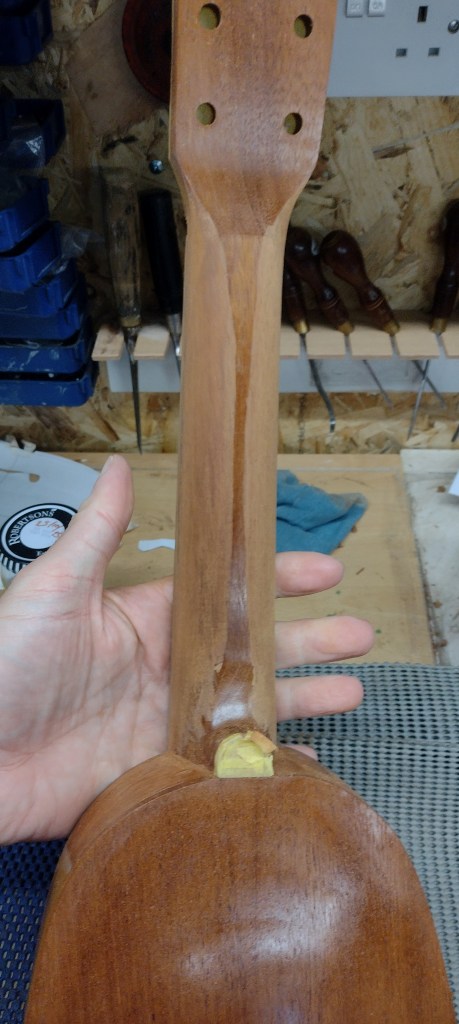
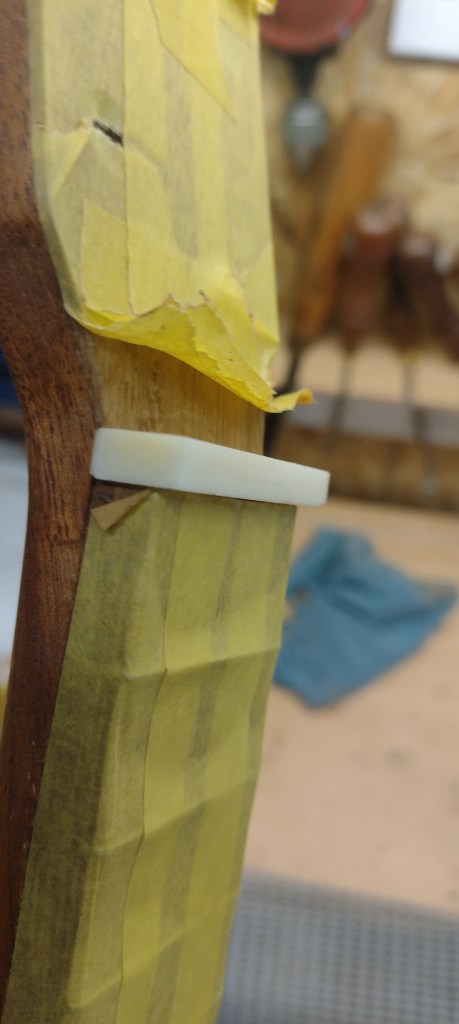
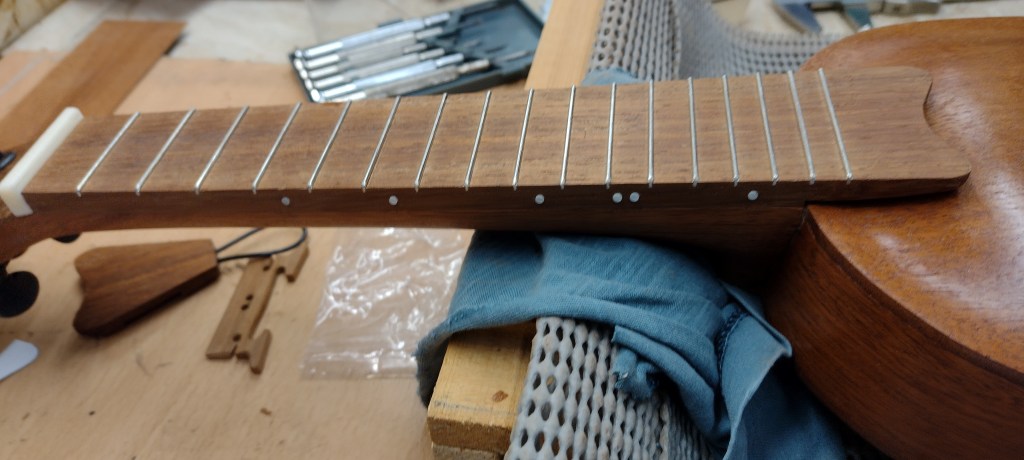
The fretboard is too thick which makes the neck too thick at the nut. I did this to avoid needing any support for the fretboard where it leaves the neck over the soundboard. However, I didn’t actually put any frets there anyway so a thinner fretboard would be better.
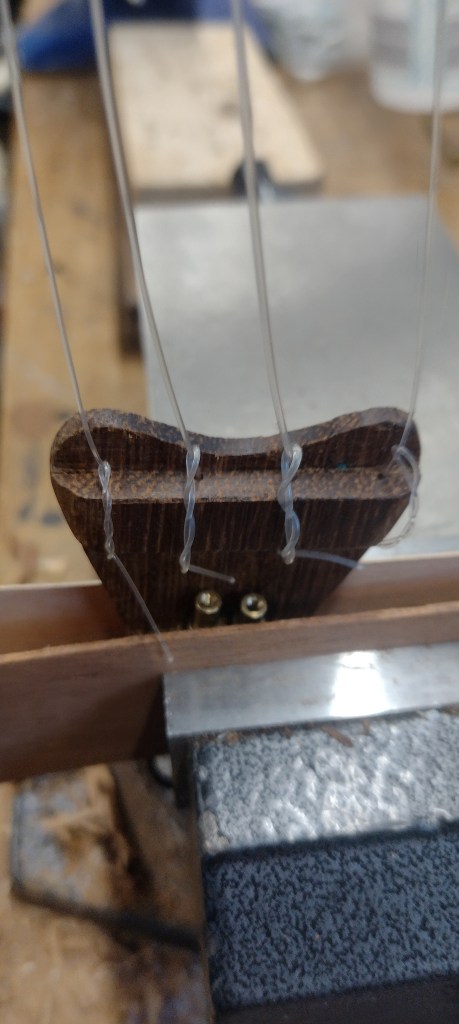
One problem I hadn’t expected is holding the thing. I normally support a uke by jamming it against my body with the strumming arm. WIth this one the tailpiece gets in the way a bit and the instrument tends to slip down, aided by the rounding of the back. Easiest way to avoid this would be a strap.
The Tune-a-lele tuners are excellent – about the right ratio, light weight, very low backlash, and not expensive.
So what next? Another one of these, or something else? Got a few more boring jobs to do first before I need to decide…
 Martin's Blog